
labor
Choreographers join SAG-AFTRA for the first time under new Schedule J rule
Choreographers joined SAG-AFTRA under a new Schedule J provision in 2026, gaining union benefits and formal working conditions after decades outside the labor structure.
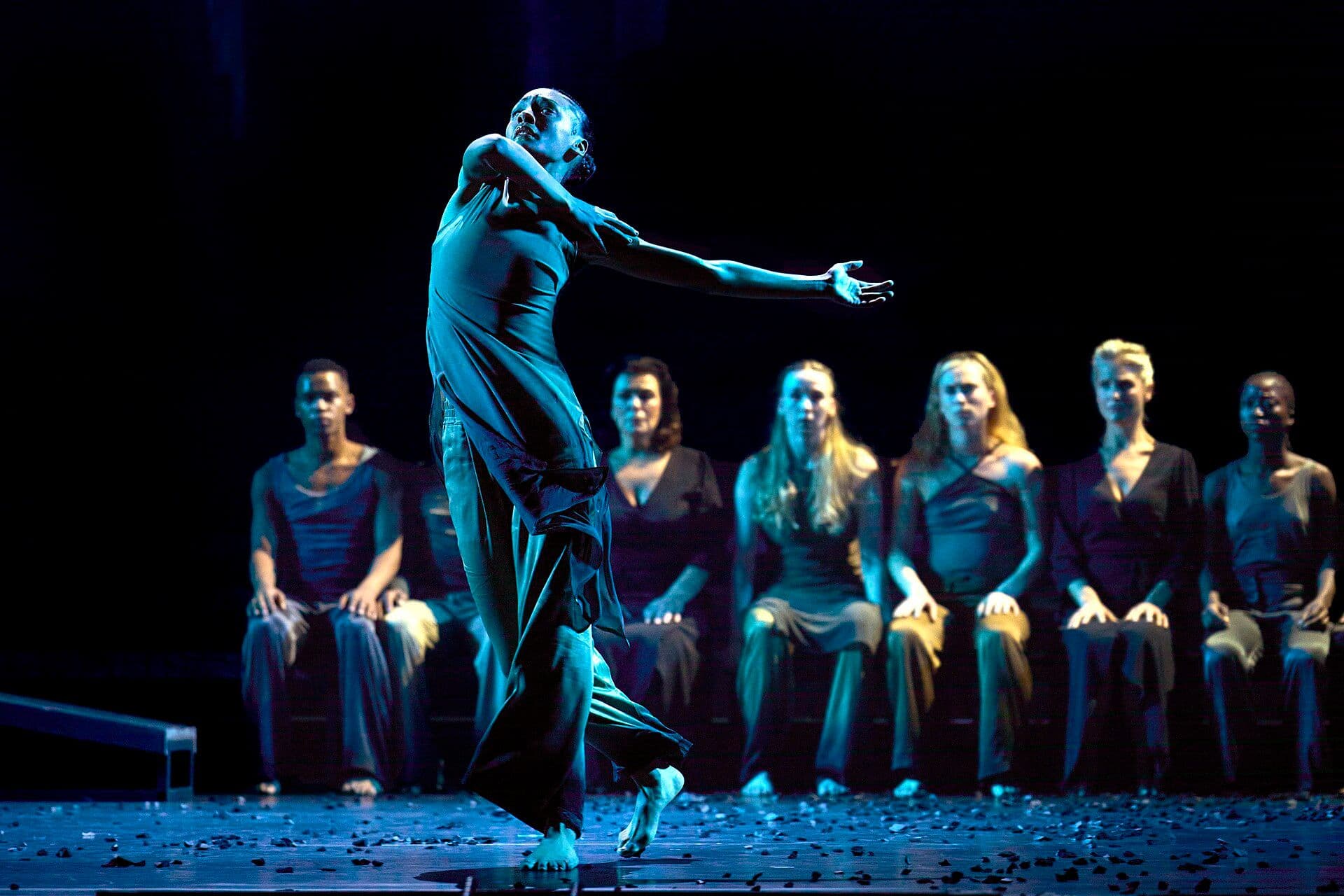
For decades, choreographers in film and television worked as independent contractors without union representation, classified separately from the dancers they directed and trained. The 2026 SAG-AFTRA contract changed that fundamental structure. Beginning July 1, 2026, choreographers and assistant choreographers are now covered by Schedule J, Part II of the union agreement, marking their first inclusion in a SAG-AFTRA collective bargaining agreement and ending a gap that left roughly 4,700 working choreographers in the United States—including those in film and television—operating outside formal labor protections.
Choreographers had operated in a structural void. While dancers performing in films and television could claim SAG-AFTRA membership, the people designing, choreographing and directing their movement had no comparable representation. This absence forced choreographers to negotiate individually with producers over compensation, benefits and working conditions. The median hourly wage for choreographers stood at $26.59 as of May 2025, with the highest 10 percent earning above $66.65 hourly and the lowest 10 percent below $16.39. Many worked part-time or maintained variable schedules, traveling for different productions. The 2026 SAG-AFTRA agreement—a four-year deal running through June 2030—shifted this dynamic entirely by bringing choreographers into the formal union structure.
Who choreographers are and what changed
Choreographers are creative workers who design movement vocabulary, teach performers how to execute it, and often supervise dancers on set. In film and television, they work during pre-production to develop sequences, then on set to direct performers and ensure continuity of movement across multiple takes and shooting days. Unlike dancers, who have long held SAG-AFTRA membership when performing union work, choreographers lacked any equivalent status. About 40 percent of the 4,700 choreographers employed in the United States work as self-employed independent contractors, according to the Bureau of Labor Statistics.
The inclusion under Schedule J, Part II gives choreographers direct access to the same pension and health benefit contributions as SAG-AFTRA performers, effective July 1, 2026. Pension and health contributions jumped to 22 percent of compensation by September 6, 2026, with the additional 1 percent increase that the broader 2026 deal negotiated from studios. This means choreographers working on union films and television now contribute to and draw from SAG-AFTRA's unified pension and health system, a structure that did not previously extend to them.
The agreement explicitly states that 'engagement is at producer's sole discretion' and 'no mandatory staffing' requirements exist for choreography. This preserves production flexibility: a producer still decides whether to hire a choreographer, and for how long. But once hired, that choreographer now operates under a formal union contract with defined rights and protections, a shift from the previous arrangement where terms were entirely ad hoc.
The negotiated rate structure
Unlike most SAG-AFTRA work categories, which carry published minimum rates, choreographer compensation under Schedule J, Part II is individually negotiated. Choreographer compensation itself carries no minimum. What is fixed is the pension and health contribution: producers must calculate it using at least the applicable solo or duo dancer rate, or compensation for any other covered category, whichever is greater. This guarantees a benefits floor, not a pay floor, since the relevant comparison depends on the production and the work involved.
The GreenSlate summary of the 2026 agreement notes that Schedule B television and theatrical weekly rates began at $5,150 and $6,350, respectively, as of July 1, 2026, part of minimum salary rates that rise 3 percent annually across the four-year term. Choreographers negotiating rates can reference these figures, but since choreographer compensation itself carries no published minimum, the actual rate each choreographer receives depends entirely on production-by-production negotiation. A choreographer on a prestige streaming drama might negotiate differently than one working on a network television show.
Producers retain significant leverage. Since hiring is discretionary and choreographers must negotiate individually rather than claiming a published scale, choreographers lose the wage protection that comes with fixed minimums. Conversely, established choreographers with strong portfolios have room to negotiate favorable rates. The first year of contracts under this system will likely establish informal precedent about what rates typical productions pay, shaping expectations for future negotiations.
The 2026 labor landscape and health plan crisis
Choreographer representation was one element of a broader 2026 contract cycle that differed dramatically from 2023, when the Writers Guild of America and SAG-AFTRA each staged strikes lasting over 100 days. In 2026, all three major unions—SAG-AFTRA, the WGA and the Directors Guild of America—reached agreements without job actions, reflecting both union strategic choices and studio urgency around health plan solvency.
Health plan deficits had become acute. The WGA's health plan alone had lost more than $120 million in the roughly two years between its 2023 strike settlement and the 2026 negotiations. This unsustainable burn rate forced both parties to prioritize plan funding. The WGA's 2026 agreement included a $321 million injection into its health plan. The Alliance of Motion Picture and Television Producers offered approximately $110 million across the three unions' health plans—less dramatic than the WGA figure alone but still substantial.
In exchange, studios pushed for longer contract terms. The AMPTP sought five-year agreements, moving away from the traditional three-year contract cycle. The WGA settled for four years, as did SAG-AFTRA. This represented a significant shift: longer contracts provide studios with labor cost predictability, while unions accepted extended terms in exchange for health plan relief. For choreographers, this meant inclusion happened within the context of a broader labor settlement prioritizing health benefits over wage pushes.
“Unlike performers with defined minimum scales, each choreographer must now negotiate within the framework rather than against it.”
Why choreographers were included now
The inclusion reflects both industry change and union strategy. As streaming productions proliferated after 2020, choreography remained essential to musicals, dance-heavy dramas and prestige television. This created consistent demand for choreographic services. SAG-AFTRA saw an opportunity to formalize a category of workers increasingly central to productions while their labor remained entirely unregulated.
The timing also fit a pattern of tightening labor standards across creative roles. The 2026 agreement secured new protections around synthetic performers and digital replicas. Producers now must demonstrate that an AI-generated performer brings 'significant additional value' compared to hiring a real actor or licensing their digital replica. Studios also cannot use a performer's digital replica to replace them during a strike.
SAG-AFTRA members ratified the agreement on June 5, 2026, with 91.42 percent voting in favor, described as one of the most emphatic ratification votes in the union's recent history.
What happens next: implementation and open questions
The individually negotiated rate structure creates both flexibility and uncertainty. Unlike performers with defined minimum scales, each choreographer must now negotiate within the framework rather than against it. Producers retain sole discretion over hiring, meaning demand for choreography—and thus bargaining power—remains market-dependent. A choreographer on a tentpole film has more leverage than one working on a limited-budget series.
The agreement's language around pension and health contributions—calculated on 'whichever is greater' between the solo dancer rate and other covered categories—requires practical interpretation. In productions where choreographers don't fit neatly into existing dancer classifications, the comparison may be ambiguous. The first contracts negotiated under this language will likely establish informal precedents that guide future discussions, creating case law within the industry about what counts as a valid rate comparison.
Pension and health contributions apply to choreographers as of July 1, 2026, initially at the existing percentage levels with the 1 percent increase that took effect September 6, 2026. This gives SAG-AFTRA immediate revenue from choreographer work while allowing time to assess whether separate rate structures for choreography become necessary as the category develops. If choreography work becomes common enough, future contract cycles might establish published choreography minimums rather than the current negotiated framework.
The 2026 agreement runs through June 30, 2030, giving both choreographers and producers nearly four years to establish working norms under the new system. By the time the 2030 negotiations begin, the question of whether choreography needs published minimums—or whether individual negotiation has worked well enough—will likely be better informed by what actually happened in thousands of productions over the previous four years.
More from Hollywood

theatrical strategy
Why theatrical windows now range from 30 days to 163 before streaming
Studios use exclusive theatrical periods to maximize revenue across multiple platforms. The length varies by studio strategy, film performance, and the cascade of monetization windows that follow.

deals
How studios structure first-look and overall deals with producers
First-look and overall deals give studios priority access to producers' projects, but operate under fundamentally different terms.