
film festivals
What role film festivals play as both cultural institutions and industry marketplaces
How major film festivals like TIFF, Tribeca and SXSW function simultaneously as premiere platforms for artists and organized marketplaces where filmmakers secure financing and distribution deals.
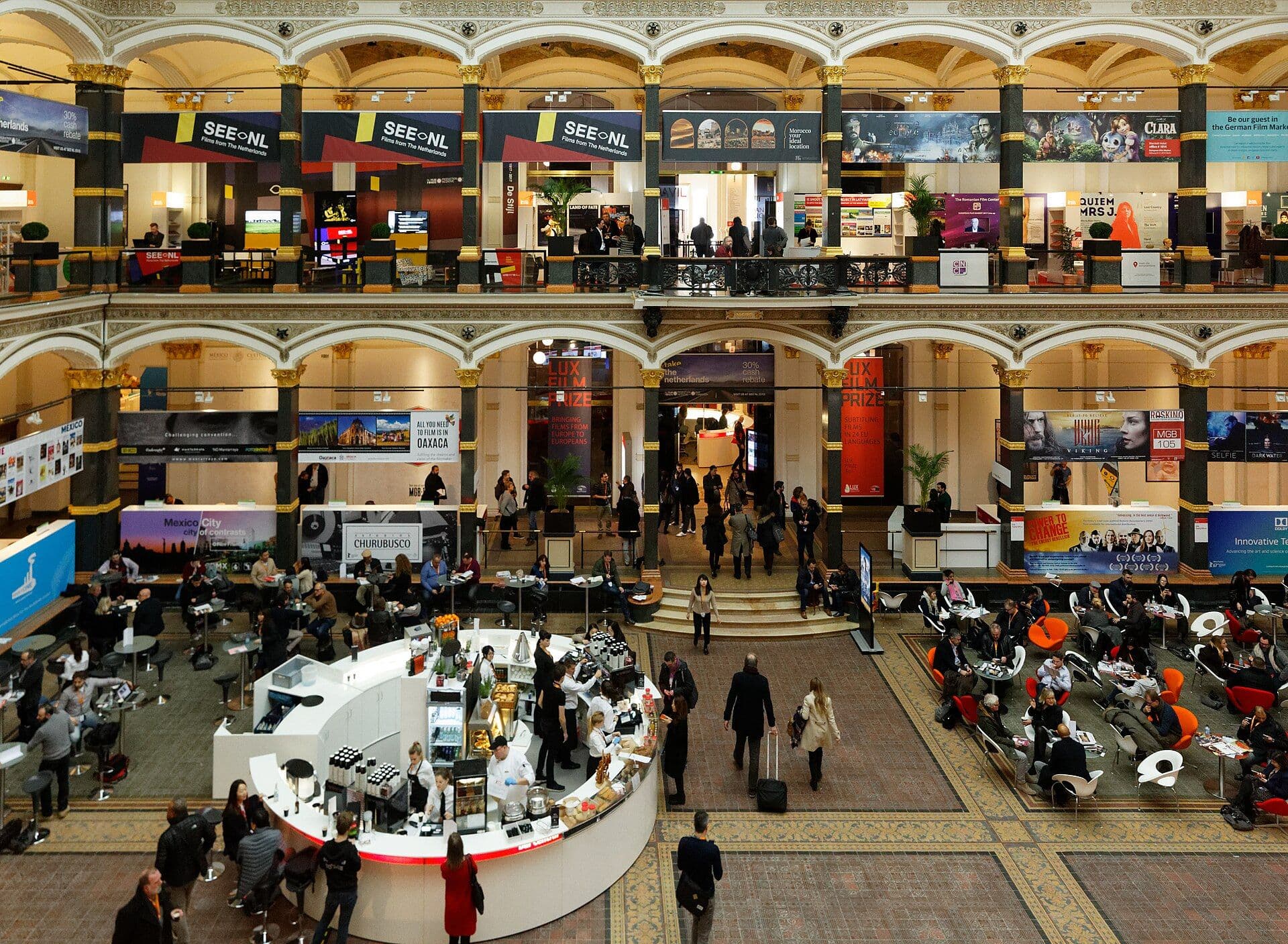
Film festivals occupy an unusual position in the entertainment industry. They are cultural institutions that celebrate artistic achievement and create communal experiences around cinema. They are also organized marketplaces where producers secure millions of dollars in production financing, where distributors identify acquisition targets, and where major territorial deals are struck. These dual functions—cultural and commercial—are not in tension but deeply intertwined. The festivals that matter most to the industry are those that excel at both, drawing audiences who want to experience cinema as art while simultaneously drawing the industry professionals whose decisions shape which films get made and reach audiences.
That dual role has become more formalized in recent years, especially in the past five years. Where dealmaking once happened in hotel lobbies and coffee bars alongside formal screenings, major festivals now operate dedicated marketplace programs with formal infrastructure. TIFF launched TIFF: The Market in 2026. Tribeca runs its Creators Market in its tenth year, selecting 40 projects annually. Sundance hosts the Catalyst financing initiative. These programs exist alongside traditional festival programming, creating distinct but overlapping pathways for films to circulate as cultural objects and as commercial products simultaneously.
The festival hierarchy and cultural gatekeeping
Film festivals function as cultural institutions by determining which films receive premieres, gain critical attention, and reach wider audiences. A world premiere or regional premiere at a major festival confers legitimacy and visibility that influences both audience interest and industry decisions. As one festival manager explained, festivals are "platforms not only for garnering the first audience reactions, but to give the spotlight that translates into international press reviews, attention from distributors" and programmers worldwide.
The major festivals—Cannes, Venice, and Berlin—carry particular prestige, and where a film premieres carries measurable economic consequences for filmmakers. Strategic timing also matters significantly. Filmmakers and producers typically sequence festival submissions to maximize momentum across different geographic regions and market windows. An effective festival strategy for an independent film involves playing approximately 40 festivals worldwide over time, creating sustained industry visibility and momentum. Early festivals like Sundance and SXSW in January and March set the tone; summer festivals like Tribeca feed the awards pipeline; fall festivals like TIFF and Venice position films for year-end awards consideration.
How festival markets operate mechanistically
The major festival marketplaces function through formal infrastructure that brings together specific categories of industry professionals. Cannes's Marché du Film, established in 1959, is the world's most important international film market and operates as the model others follow. The market operates alongside 250 industry events, 1,500 film market screenings, and specialized programs including Investors Circle, which unites leading experts in film and media financing.
Berlin's European Film Market operates at similar scale alongside the Berlin International Film Festival. The EFM has positioned itself as the first major film market of the year, serving as what market participants call "a compass, barometer and pacesetter for the new film year." These markets function through a structured dealmaking process where sales agents represent films, screen them for buyers—including distributors, streaming platforms, and production companies—and negotiate territorial licensing deals. A buyer might purchase theatrical distribution rights for Japan while another negotiates streaming rights for Latin America, carving up global territories among different distributors.
Organized marketplaces with formalized infrastructure
Newer festival markets are adopting marketplace infrastructure that was previously informal or nonexistent. TIFF: The Market, launched in 2026, runs alongside the festival itself. The market includes development labs for projects in early stages, a dedicated financing forum bringing together financiers and established producers to fast-track funding across film, television and other storytelling verticals, and an intellectual property exchange where producers can pitch adaptation rights to studio executives and producers. The event draws 800 accredited buyers plus 250 additional international buyers invited specifically for the market.
Tribeca operates the Creators Market, now in its tenth year, which annually selects 40 projects across film, series, and audio. The market connects selected filmmakers with studios, financiers, and production companies through curated one-on-one meetings with industry leaders including Sony Pictures Classics, HBO, Cinetic Media, National Geographic, and others—creating direct pathways to financing, completion funding, and distribution. Tribeca also launched Tribeca Films, a distribution label that acquires and distributes independent films from across the festival circuit. The label, in partnership with digital distribution company Giant Pictures, intends to acquire 25 titles per year from major festivals including Sundance, Berlin, SXSW, Cannes, TIFF, and Tribeca itself, effectively creating a permanent acquisition presence at the circuit.
Deal-making patterns and acquisition dynamics
SXSW demonstrates how festivals operate as active acquisition marketplaces. The festival presents over 350 screenings annually and hosts more than 150 world premieres. Every major streaming platform—Netflix, Apple, and Amazon—maintains a programming and acquisitions presence at the festival. According to recent market observations, acquisitions at SXSW tend to unfold across multiple screenings rather than peaking immediately after a premiere; when these platforms acquire a film at SXSW, the decision is often made by people who have spent multiple days in Austin attending different contexts, building relationships with filmmakers, and evaluating projects across different screenings.
Sundance operates through a structured auction process. Films in competition receive four to five public screenings and one industry screening, each representing an opportunity for multiple buyers to make offers. A bidding war develops when several buyers attend the same screening and industry buzz reaches critical mass. Agencies including WME Independent, UTA Film Finance, and CAA Media Finance actively work Sundance to broker distribution and financing deals. According to Screen Daily reporting, deal-making has become increasingly front-loaded at festivals like Berlin, with sales agents conducting virtual meetings two weeks before official market opening and in-person meetings days in advance. As one executive noted, "Everything is so front-loaded now," with participants beginning deal discussions well before the festival proper starts.
“The festivals are platforms not only for garnering the first audience reactions, but to give the spotlight that translates into international press reviews, attention from distributors and festival programmers from around the world.”
Financing outcomes and the prestige premium
For filmmakers seeking production funding or distribution, festival participation can directly translate into capital. The prestige of the premiere venue directly affects financial outcomes. According to analysis by The Film Collaborative, films premiering at Sundance generate median screening fee revenue of $32,650, while SXSW premieres command slightly higher medians of $34,483. Films premiering at non-A-level festivals generate median screening fees of $12,825. Genre also affects revenue: LGBT-themed films generate higher median screening fees of $20,282 compared to environmental films at $8,645.
Festivals have become increasingly important as career launch platforms as traditional theatrical distribution has become more challenging to secure independently. A strong premiere at a major festival maximizes visibility, adding value not only for distribution negotiations but also for further festival bookings and creating momentum that attracts industry attention. Festival managers now play a larger role in coordinating overall festival strategy and timing, recognizing that premiere prestige directly influences which distributors, streaming platforms, and production companies take interest in a film. Most independent filmmakers never receive screening fees directly; instead, the value lies in distribution opportunities. Festival screening fees typically go to films with representation or to films premiering at prestigious venues where distributors or streaming platforms are actively acquiring.
The integrated model serving multiple functions
The largest and most influential festivals function as integrated systems where the cultural and commercial operate simultaneously without contradiction. Tribeca positions itself as "a year-round engine for storytellers," with its industry programming addressing the full creative pipeline from project conception through market distribution. SXSW similarly brings together filmmakers, show runners, and executives for "200 sessions across writers' rooms, indie financing, distribution and streaming, documentary craft" alongside its festival screenings, marketplace, and acquisitions activity. TIFF: The Market explicitly bridges both functions by operating alongside the festival's regular programming.
This integrated approach serves multiple constituencies with aligned rather than competing interests. For filmmakers, festivals create venues where work can be seen simultaneously by audiences seeking cultural experiences and by industry professionals seeking commercial opportunities. For financiers and distributors, festivals create predictable gathering points where projects at various development stages can be discovered and evaluated alongside other options. For the public, it creates festivals that function as cultural events with prestige and community value. The festivals that thrive are those that excel at all three functions—serving artists, business professionals, and audiences equally.
More from Society
entertainment unions
How the Motion Picture Industry Pension and Health Plans actually work
Employer contributions tied to hours worked give Hollywood's freelance workforce portable health insurance and retirement security across multiple productions.

entertainment industry
How nonprofit organizations fund a safety net for entertainment workers
Foundations and residences created by industry leaders provide housing, healthcare and financial aid to workers facing hardship. Studios and unions funnel billions into structured benefit plans.