
Film permits
What a $931 Los Angeles Permit Fee Leaves Out: FilmLA and City Department Charges
A standard-tier Los Angeles shoot pays a $931 permit fee, then separate FilmLA and city department charges, with tiers and timelines set by scope and location.
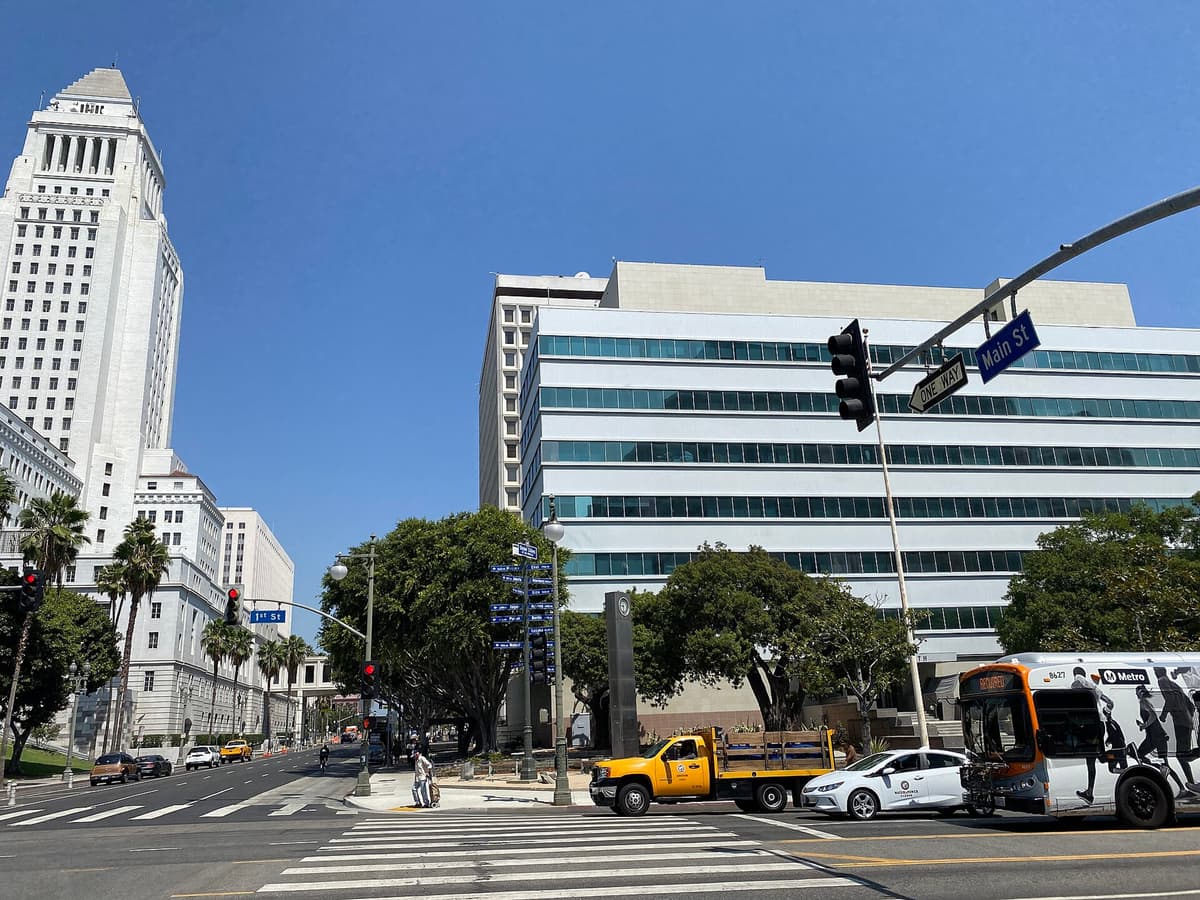
A film crew that wants to shoot on a Los Angeles street or in a park starts with paperwork, and the first payment is due before anyone is cleared to work. The cost is spread across several bodies: the application fee and add-ons collected by FilmLA, plus department charges for police, parking and property use that are billed on their own lines.
FilmLA's fee schedule, last published Oct. 20, 2026, lists each charge and says the fees are subject to change at the discretion of the municipal service providers. The figures below come from that schedule, FilmLA's application guidance and a 2024 fee increase. Together they show that a single shoot can face several separate charges.
Tier Choice Sets the Base Fee
Each permit is set by a tier. The standard tier covers up to five production locations within seven consecutive days, with reality shows treated as an exception. One application fee of $931 applies to that package.
The tier also sets where a production can film, which activities it can add and how long the permit lasts, according to FilmLA's guidance.
The low impact tier is available only inside the City of Los Angeles. It covers up to three locations within three consecutive days. A production that chooses it cannot switch to the standard tier without filing a new application.
Locations added later do not trigger a new fee if they fit the existing window and location limit. A location outside the window will incur a new App Fee, and locations added without a fee must keep the total within the limit. Base camp and crew parking do not count toward the limit but must still fall inside the window. Once the first location tied to the application fee has been released, no new locations can be added, and any later location needs a separate permit and fee.
Some applicants pay reduced rates. Students qualify only if they are enrolled in an accredited school and filming for course credit, and documentation must reach FilmLA by the permit deadline. The fee schedule lists $52 for a simple student permit and $134 for a complex one. Non-profit public service announcement permits carry a $73 application fee.
Processing Times Depend on Impact and Location
FilmLA's guidance gives basic permits 3 to 7 business days, depending on the jurisdiction and the complexity of the request. High-impact activity, such as street closures, gunfire and special effects, and any location outside the City of Los Angeles, takes 5 to 10 business days.
Public school district locations need at least five business days, and the guidance suggests contacting schools@filmla.com in advance when a deadline is unclear. Some school districts outside FilmLA's service area also require a separate city permit.
Processing cannot be expedited, regardless of size, type or scope. Late locations cannot be processed, and the application fee is not refunded.
The application fee also acts as a gate. It must be paid in full before the application moves to review and assignment. An unpaid application remains in draft, and FilmLA cannot process it. Payment can be made by US and international credit card, though additional processing fees apply.
FilmLA's Own Charges Stack by Location and by Hour
Beyond the $931 base fee, FilmLA's schedule lists a $232 notification fee per base radius. It also charges $78 per involved location for lane closure administration, and the same amount for each involved location that uses gunfire, explosion and smoke effects, drones or helicopters. Because these charges are set per involved location, the total grows with each location added.
An on-site FilmLA monitor costs $44.50 an hour. The schedule sets a minimum for monitor time and notes that overtime and double-time rates apply.
Rider fees cover added work under the same permit, at $148.75 per rider during business hours and $208 per rider after hours. Still photography has a lower schedule, with a $104 application fee for still permits and $31 per rider. Still permits for a cast and crew of 16 or more use the motion rate instead.
City Departments Bill Separately, Sometimes to Providers
The City of Los Angeles adds its own schedule. A lane and street closure fee is $312 per involved location. A curbside posting fee is $69 per 300 feet, and it is paid directly to the provider rather than through FilmLA.
The Los Angeles Fire Department adds its own charges. A spot check surcharge is $285 per permit. A Fire Safety Officer costs $126 an hour, with a four-hour minimum plus one hour of travel time.
Police officers are billed outside the permit as well. Active-duty LAPD officers cost $74 an hour, with a two- to four-hour minimum and no overtime rate. Retired or off-duty officers cost $67.19 to $77.90 an hour with an eight-hour minimum, and a retired or off-duty motorcycle officer adds $75 a day. FilmLA's schedule says these are paid directly to the provider.
“The application fee is the gate: until it is paid, the application stays in draft and FilmLA cannot process it.”
Park, Port and Utility Property Carry Daily Rates
Recreation and Parks lists a $450 film use fee per day, a $150 daily prep and strike fee, and $100 a day for crew parking of one to 15 cars. Crew parking for 16 or more cars is $300 a day. A base camp-only booking costs $450 a day. Still photo shoots pay $75 a day for one to 14 people, or $150 a day for 15 or more.
Recreation and Parks monitors cost $38 an hour, and each monitor shift carries a $76 reporting fee. A special facility service fee of $150 a day applies. The standard use fee is waived when the special facility fee has already been collected.
The Port of Los Angeles lists a $300 daily use fee and a $100 daily prep and strike fee, with $150 a day for crew parking only. Port police officers cost $112 an hour. Department of Water and Power facilities range from $800 to $2,000 a day for film use, and still photography costs $500 a day. DWP monitors cost $50 to $70 an hour.
Refunds, a 2024 Fee Increase and a Thinner Shoot Calendar
The application fee is non-refundable, and elective cancellations are not refunded. For unforeseen circumstances, a 30-day grace period lets a producer apply the fee to a future permit if the new date falls within 30 days of the original first activity date.
FilmLA raised its fees by roughly 4% effective July 1, 2024, when the permit application fee rose to $931. The organisation cited a continuing downturn in on-location production and rising wages and benefits, which it says make up nearly 80% of its annual operating budget. It also says it receives no state or local government funding for its services. FilmLA says it has already downsized its office space and right-sized its workforce. Its president, Paul Audley, said the organisation would not raise fees without first cutting operating costs. The same increase raised other rates as well.
Shoot volume fell in 2025. TheWrap, citing FilmLA, reports 19,694 shoot days in Los Angeles County in 2025, down from 23,480 in 2024, a drop of 16%. Fourth-quarter activity reached 4,625 shoot days, up 5.6% from the third quarter. TheWrap puts the year-over-year fourth-quarter drop at 21%, though its quarter totals of 4,625 and 5,680 show a decline of about 19%. Television shoot days were 6,582 for the year, 50% below the five-year average, and feature shoot days were 1,999, 31% below it. Reality TV shoot days totaled 3,440, down 12% from 2024. TheWrap says every major category was at least 30% below its five-year average.
More in Society
Sundance Institute
What a $3 Million Hearthland Gift Pays For at Sundance Institute, and What It Leaves Open
The multiyear gift funds the Feature Film Program, artist fellowships and unrestricted grants, and the Directors Lab's return to Sundance Mountain Resort in Utah.
Directors Guild
How the Directors Guild Ratified Its Four-Year Studio Contract
The Directors Guild's members approved a four-year deal with major studios in late June 2026, after the guild's national board unanimously recommended it on June 12.
- Selena Gomez's Rare Impact Fund Benefit Raises Nearly $3 Million for Youth Mental Health
- Taylor Swift to close Academy Museum's sixth annual gala on October 17
- Arts Nonprofits Grew Half as Fast as Education in a Record $617.2 Billion Giving Year
- What apprenticeships and fellowships offer new entrants to Hollywood