
criticism
Why Adaptations Fail, and What the Good Ones Do Differently
Fidelity is the wrong target. The adaptations that work identify what a story is doing and rebuild that in a different medium.
Adaptation is the most common form of commercial storytelling and among the least understood. The recurring complaint — that a version was unfaithful — mistakes the problem. Unfaithful adaptations frequently succeed; scrupulously faithful ones frequently fail. What separates them is a different question entirely.
Fidelity is not the variable
A novel and a film are different instruments. Prose can occupy interiority directly, move through time in a clause, and withhold information the reader never knows was withheld. Film shows an exterior and controls attention through duration and framing.
A scene transcribed faithfully from page to screen frequently loses its function, because the effect it produced depended on properties the new medium does not have. Interior monologue becomes voiceover, which flattens. An ambiguity held across chapters becomes a shot that must show something.
The useful question is not what happens in this scene but what is this scene doing — and then, what would do that here?
The recurring failure modes
Compression without restructuring is the most common. A long novel is reduced by removing material while preserving sequence, producing a version that hits every plot point and has no room to breathe. The result feels like a summary because it is one.
Literalism about voice is the second. A distinctive prose style is not reproducible by having characters speak the way the narration read. Style in prose is often authorial rather than dramatic, and transplanting it into dialogue makes people sound peculiar.
Third is reverence. An adaptation treating its source as sacred cannot make the cuts and inventions the new medium requires. Filmmakers who admire a book uncritically often produce weaker versions than those willing to argue with it.
Fourth, and most commercially driven, is audience confusion — a version trying simultaneously to satisfy readers who know the story and viewers who do not, and serving neither. Those groups want incompatible things: recognition versus surprise.
What the successful ones share
They identify the load-bearing element and protect it while changing almost anything else. Sometimes that is a relationship, sometimes a moral question, sometimes an atmosphere.
They invent freely in service of that element. Characters merge, timelines reorder, sequences appear that exist nowhere in the source — and readers who care about the book often accept these readily, because the thing they valued survived.
They also match form to material. A sprawling novel with many subplots frequently belongs in a series rather than a film, and a tightly-focused novella often makes a better film than a stretched season. A great deal of adaptation failure is a length decision made for commercial reasons rather than structural ones.
The reader problem
There is an unfixable asymmetry. Readers experience an adaptation against a version already in their heads, complete with faces and rooms the book never specified. No adaptation can match a private construction.
The versions that survive this tend to be confidently different — clearly a distinct object rather than a failed reproduction. A film that looks like an attempt to film the reader's imagination invites comparison it must lose. One that plainly reinterprets is judged as itself.
Why so many are attempted
The commercial logic is straightforward: a known property carries a built-in audience and a demonstrated appetite, which reduces perceived risk.
That logic is sound and produces a predictable distortion. Adaptations are commissioned because the source succeeded, which means the pressure is towards preservation — precisely the instinct that produces the weakest versions.
The adaptations worth watching are usually the ones where someone was given permission to break the thing they were adapting. That permission is granted less often than it should be, and it is the single best predictor of whether the result will be any good.
More in Culture

Box Office
Clayface Opens to $24 Million Domestic and $43 Million Worldwide From 3,458 Theaters
DC Studios' Clayface opened at No. 1 with $24 million domestic and $43 million worldwide over Oct. 23–25, 2026, from 3,458 domestic theaters.
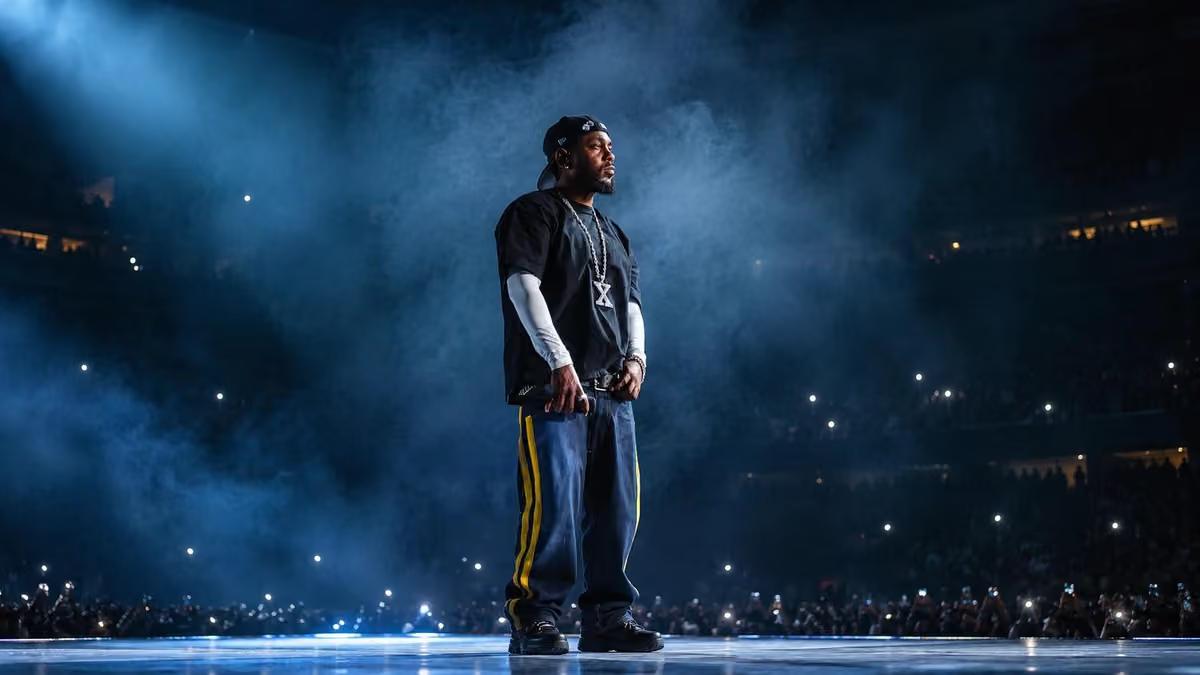
Kendrick Lamar
Kendrick Lamar in 2026: The Most-Awarded Rapper in Grammy History Plots His Next Move
Two years after GNX, the Compton rapper holds records at the Grammys, the Super Bowl and the box office. Here is where Kendrick Lamar stands now, and what to watch next.