
studio deals
First-Look Deals Offer Freedom; Overall Deals Offer Millions and Exclusivity
Studios and streamers use two very different structures to lock down producer talent. First-look deals offer overhead and freedom; overall deals offer guarantees and exclusivity.

A first-look deal gives a studio or streaming service the right to review a producer's projects before anyone else. The studio has 30 to 60 days to decide whether to develop the project. If it passes, the producer is free to shop the project to competitors through a process called turnaround. There is no exclusivity on the producer's time or where they work—only a contractual obligation to show the studio everything first.
An overall deal is far more restrictive. The producer works exclusively with the studio for 2 to 4 years and cannot develop projects elsewhere, even if the studio rejects pitches. Everything the creator develops belongs to that studio for the contract term. In return, the studio commits far more money.
How first-look deals work in practice
The first-look process is straightforward. A producer develops new content concepts or scripts. The studio receives the initial opportunity to review the pitch. If interested, the studio can option or greenlight the project. If the studio declines, the producer may take the project to other buyers.
In exchange for this priority access, the studio provides a holding fee or production budget that covers office space on the studio lot, assistant salaries, and development executive support. A mid-tier television producer under a first-look deal typically receives overhead over two years, plus development fees on any projects the studio chooses to develop further. These deals are non-exclusive: a producer can maintain first-look deals with multiple studios simultaneously, pitching their second project to Netflix while their first is under review at Amazon.
First-look deals apply equally to film and television. The studio gains priority, not exclusivity. This distinction is crucial. The producer remains a free agent once the studio passes. No intellectual property stays locked with the studio if the project is rejected. If a pilot gets turned down by the studio that held the first look, the producer can immediately pitch it to other networks.
What overall deals require
Overall deals represent the opposite end of the spectrum from first-look arrangements. Under an overall deal, the studio essentially owns everything the creator develops for the contract term—typically 2 to 4 years. The producer becomes exclusive in-house developers, functioning more like a studio employee than an independent producer. This exclusivity means a showrunner cannot pitch rejected series to another network, even after the studio has passed.
The compensation reflects this exclusivity. The studio pays a guaranteed annual payment covering the creator's personal salary and the costs of running their production company. This includes office space on the lot, support staff, development executives, and travel. The studio also provides creative development budgets for purchasing material and developing scripts.
However, these headline figures often represent ceilings, not guarantees. The true arrangement is more complex. An overall deal typically combines a guaranteed base payment with contingent components: project fees and producer fees if projects greenlight, backend participation if shows succeed, and bonuses tied to performance metrics. The space between the guarantee and the ceiling is where all these contingencies live. Taylor Sheridan's widely-reported $1 billion deal in 2025 illustrates this principle: that ceiling value depends on multiple projects being greenlit and performing well, with creator fees, executive producer fees, writing fees, and backend participation stacking on top of each other.
What production overhead actually covers
Both deal types include overhead payments, but the amounts and scope differ significantly. Overhead covers the operational costs of running a production company: office space on the lot, the salaries of assistants, and development executives.
An overall deal's higher overhead provides breathing room for larger staffs and more substantial development budgets.
The structure of compensation: guarantee versus ceiling
Both deal types separate guarantee from ceiling. A guarantee is what a producer earns regardless of performance—the floor. A ceiling is the maximum possible value if all projects greenlight, succeed and bonuses trigger. When entertainment headlines report a showrunner's '$500 million deal,' they are reporting the ceiling, not what the producer will actually earn.
A first-look deal's guarantee is primarily the overhead payment plus any development fees the studio pays when picking up a project. Backend points—future revenue participation—are rare because first-look producers typically do not retain ownership of projects the studio buys. Once the studio greenligts a show, the studio owns it.
An overall deal's guarantee is larger but still typically below the headline figure. Ryan Murphy's 2018 Netflix deal had reported potential value. These figures represent ceilings. The guaranteed base payment is significantly lower. The full value emerges only if multiple projects survive development, greenlight, and achieve performance milestones.
“First-look deals offer studios priority access without tying up massive capital on exclusive relationships.”
Why studios choose one structure over the other
First-look deals give studios priority access to a producer's ideas without tying up massive capital on exclusive relationships. They are ideal for mid-tier producers with steady output—established enough to generate bankable projects but not famous enough to command exclusive deals. The studio gets to see everything first and maintain a consistent pipeline of concepts. The producer gets overhead support while remaining free to develop elsewhere.
Overall deals lock down proven talent. A studio that has signed a showrunner to an overall deal knows that showrunner's next ideas will be pitched internally first, not shopped around to competitors. During the development phase, when a single pilot can land at another network, that exclusivity protects the studio's investment. Overall deals concentrate development overhead on the creators with the most proven greenlight records—the showrunners who have delivered multiple successful seasons or the producers whose pilots convert to series at higher-than-average rates.
Studios also use overall deals to consolidate creative control. Rather than negotiating with independent production companies, a studio manages its content pipeline more directly. The producer's salary, staff and development budget become consolidated into one contract, giving the studio greater visibility and control over what is being developed internally.
The market contraction in overall deals
Deal volumes contracted sharply. Netflix signed Ryan Murphy to a deal in 2018 and David Benioff and Dan Weiss to a reported $250 million agreement in 2019. These represented some of the largest deals of the era.
That market has rationalized significantly. Streaming services have cut overall-deal spending as production schedules have tightened and streaming demand has stabilized. Netflix, which had been the most aggressive buyer, moved away from the massive commitments that defined the platform's early competition for talent. The company shifted strategy toward developing content with proven in-house capabilities rather than acquiring exclusive producer relationships.
Traditional studios have also pulled back. Fewer overall deals are being signed, and those that are tend to be smaller. The industry is consolidating development overhead on the creators with the highest greenlight rates. This shift reflects economic pressure: studios are producing less content overall, developing fewer pilots and greenlighting fewer series. The overhead commitments that made sense during the earlier content boom no longer align with today's leaner production schedules.
Related coverage: How studios structure first-look and overall deals with producers; What a First-Look Deal Actually Buys; Why gross points beat net profit in Hollywood talent deals.
More from Hollywood

Paramount-Warner merger
What the $110 billion Paramount-Warner consent decree requires
Judge approves $110 billion merger with consent decree requiring editorial board for CNN, 30-32 annual films, and $300 million production spending.
streaming
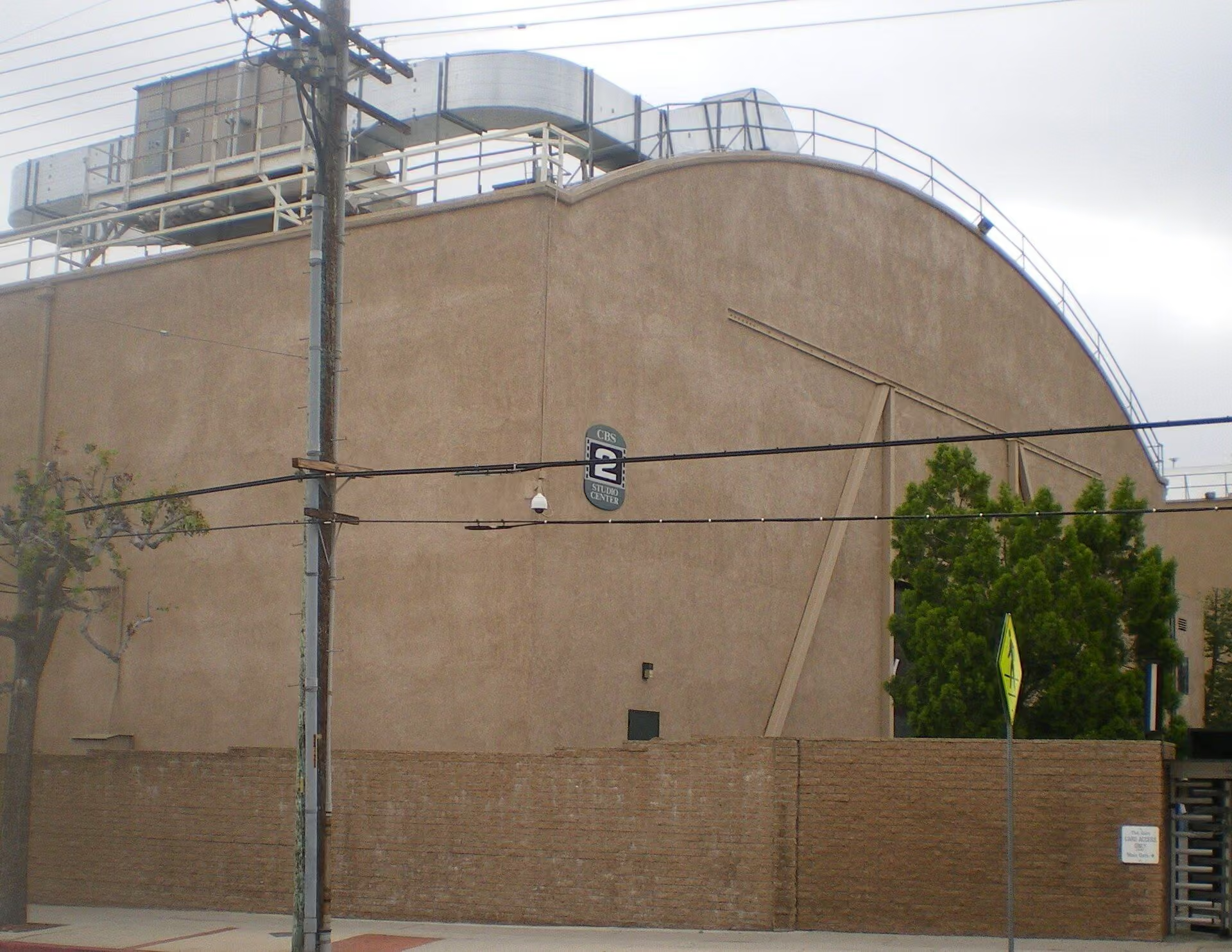
Netflix Agrees to Buy Radford Studios for $330 Million to $400 Million
Netflix is under contract to buy its first major Los Angeles soundstage campus as streamers shift from renting expensive production space to owning long-term infrastructure.