
residuals
How Streaming Residuals Are Actually Calculated for Actors and Writers
Streaming didn't kill the residual check, but it forced the guilds to rebuild the formula around subscriber counts and viewership thresholds instead of reruns.
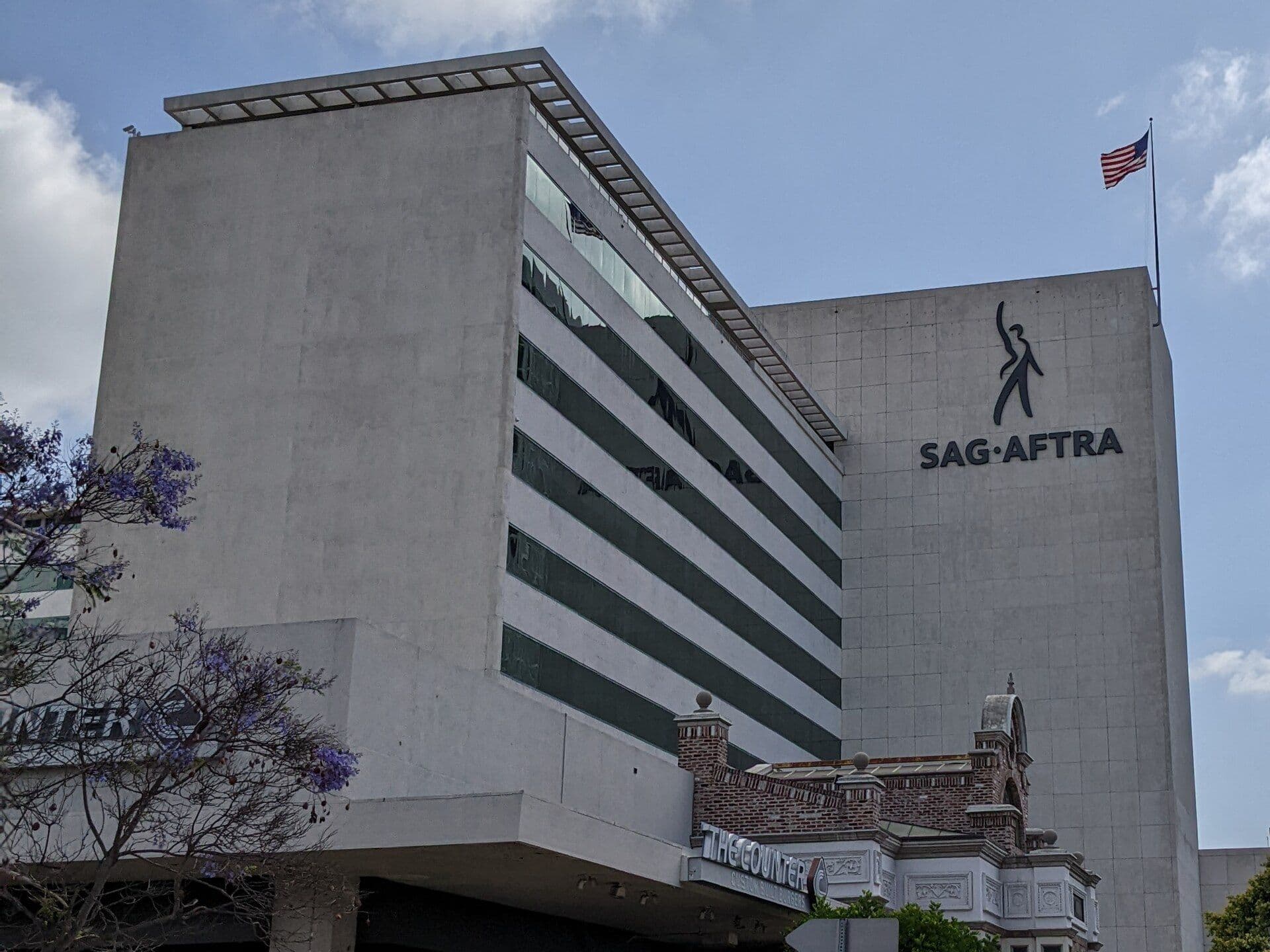
Every time a scripted show repeats on network television, or racks up hours of viewing on a subscription platform, someone owes a payment to the writers and performers who made it. That payment is a residual, and Hollywood's two largest guilds, SAG-AFTRA and the Writers Guild of America, calculate it differently depending on where a title airs and how many people actually watch it.
The math has changed twice in three years. Both guilds rewrote their streaming formulas after the 2023 strikes, then adjusted them again in new contracts finalized in 2026. The result is a system that layers decades-old rerun schedules on top of subscriber counts and viewership thresholds that most viewers never see.
How Broadcast Reruns Still Get Paid
Under the WGA's contract, a prime-time network rerun of a scripted episode pays the writer 100 percent of the "residual base," a fixed minimum tied to the script's length and the writer's contract date rather than the writer's original pay, every time the episode airs again. Non-prime-time reruns pay less with each repeat: 50 percent of the base for the second run, 40 percent for the third, 25 percent for runs four through six, and 15 percent for runs seven through ten. Payment is due 30 days after the rerun airs.
SAG-AFTRA's contract uses a declining scale for actors on syndicated reruns: 40 percent of an actor's minimum compensation for the first rerun, 30 percent for the second, 25 percent for the third through sixth, 15 percent for the seventh through tenth, 10 percent for the eleventh and twelfth, and 5 percent for the thirteenth rerun and every one after, a floor that continues indefinitely. Cable reruns have separately carried a flat 6 percent of gross receipts in perpetuity. Starting with the guild's 2014 contract, many rerun and licensing deals shifted toward a percentage of the license fee a network or platform actually pays, rather than a fixed schedule tied to the number of airings. Streaming pay is no longer about how many times something reruns; it is a formula built from a platform's subscriber count and how long a title has been available.
How Streaming Turned Residuals Into a Formula
For scripted, high-budget titles made for platforms such as Netflix, Disney+ or Amazon, the WGA calculates a streaming residual by multiplying three numbers: the residual base, a domestic subscriber factor, and an exhibition-year percentage. Under the 2023 Minimum Basic Agreement, the domestic subscriber factor is 65 percent for services with fewer than 20 million subscribers, 100 percent for 20 million to 45 million, and 150 percent for platforms above that. The first exhibition year pays 45 percent of the base.
Applied to a one-hour episode made for Netflix, Amazon or Disney+, that formula produces a domestic residual of $20,519 and a separate foreign residual of $12,311, according to the WGA's own worked example. Foreign payments use a parallel four-tier scale based on a platform's foreign subscriber count, running from a 47 percent factor at the bottom tier to 90 percent for services with more than 75 million subscribers abroad.
SAG-AFTRA's streaming formula for performers declines by year rather than multiplying a subscriber factor: a title pays 45 percent of the baseline residual rate in the year immediately following its first 90 days on a platform, 40 percent in the second year, and 35 percent in the third.
The Success Bonus: A Payout for Hits
Both guilds' 2023 contracts added something new: a bonus tied to how many people actually watch a title. A streaming "view" is defined as total viewing time divided by the title's running time. If that adds up to at least 20 percent of a platform's domestic subscribers within the first 90 days of release, or the first 90 days of any later year the title remains on the service, a bonus is triggered.
For writers, the bonus equals 50 percent of the applicable fixed residual, covering domestic and foreign payments, for programs released on or after January 1, 2024. On a one-hour episode made for Netflix, Amazon or Disney+, that produced a year-one bonus of $16,415, alongside $9,031 for a half-hour episode and $40,500 for a high-budget feature over 96 minutes with a budget above $30 million.
For performers, SAG-AFTRA's 2023 deal set the bonus at 100 percent of the applicable residual rate for titles that land in the top 20 percent by viewership, double the writers' share. Of that money, 75 percent goes directly to the cast of the qualifying title and 25 percent flows into a shared Success Bonus Distribution Fund paid out across the wider membership. The union estimated the structure would generate roughly $40 million a year, or about $120 million over three years.
“Streaming pay is no longer about how many times something reruns; it is a formula built from a platform's subscriber count and how long a title has been available.”
What the 2026 Contracts Changed
Both guilds negotiated new agreements in 2026. SAG-AFTRA and the AMPTP reached a tentative deal that members ratified by a vote of 91.42 percent to 8.58 percent; it runs from July 1, 2026 through June 30, 2030, a four-year term instead of the traditional three. WGA members ratified their new Minimum Basic Agreement by 90.38 percent to 9.62 percent, covering May 2, 2026 through May 1, 2030.
The WGA's new contract raises the high-budget streaming residual base by 2.5 percent effective May 2, 2027, with another 2.5 percent increase on May 2, 2029, and adds a 6 percent boost in year one to foreign residuals for the largest platforms. It also raises the streaming success bonus itself, from 50 percent of the fixed residual to 75 percent, for titles that clear the 20 percent viewership threshold. The deal separately raises pay for writers credited only with "Teleplay by" or "Written for Television by," who now collect 100 percent of a fixed residual instead of roughly two-thirds of it; on a one-hour episode made for Netflix, Amazon, Disney+ or Hulu, that raised the payment from $23,216 to $33,514.
SAG-AFTRA's new contract raises the share of qualifying residuals flowing into its Success Bonus Distribution Fund from 25 percent to 35 percent, pushing the total employer contribution on a qualifying title to 110 percent of the fixed residual, and lifts its top foreign-subscriber tier from a 90 percent factor to 95 percent. The deal also delivers an average 5 percent increase to residuals owed when projects move over to streaming platforms, sets minimum wage increases at 3 percent a year rather than the front-loaded schedule of the previous contract, and commits the union and studios to merging the SAG-Producers Pension Plan and the AFTRA Retirement Fund, targeted for January 1, 2028.
Where the Two Formulas Still Diverge
Even after two rounds of bargaining, the WGA and SAG-AFTRA formulas are not built the same way. Writers' streaming pay multiplies a subscriber-count factor by an exhibition-year percentage; performers' pay declines by year without a separate subscriber multiplier built into the same equation. The guilds also bargain their success-bonus payout shares separately, which is why the actors' bonus, now effectively 110 percent of a title's fixed residual, has stayed well above the writers' bonus, now raised to 75 percent.
Neither guild publishes the raw subscriber or viewing-hour data behind an individual bonus payment, so members and outside observers see the payout, not the underlying count.
Related coverage: How Streaming Changed What Counts as a Hit.
More from Hollywood

deals
How studios structure first-look and overall deals with producers
First-look and overall deals give studios priority access to producers' projects, but operate under fundamentally different terms.

film development
How film development options give producers control without buying rights upfront
Option agreements let producers secure exclusive development rights for a limited time by paying a fraction of the purchase price.