
Hollywood philanthropy
How the Hollywood Rush turns one overnight scramble into a stage show
Every fall, writers, directors and actors build original plays in under 24 hours at the Wilshire Ebell Theatre to raise money for foster-youth nonprofit FosterMore.
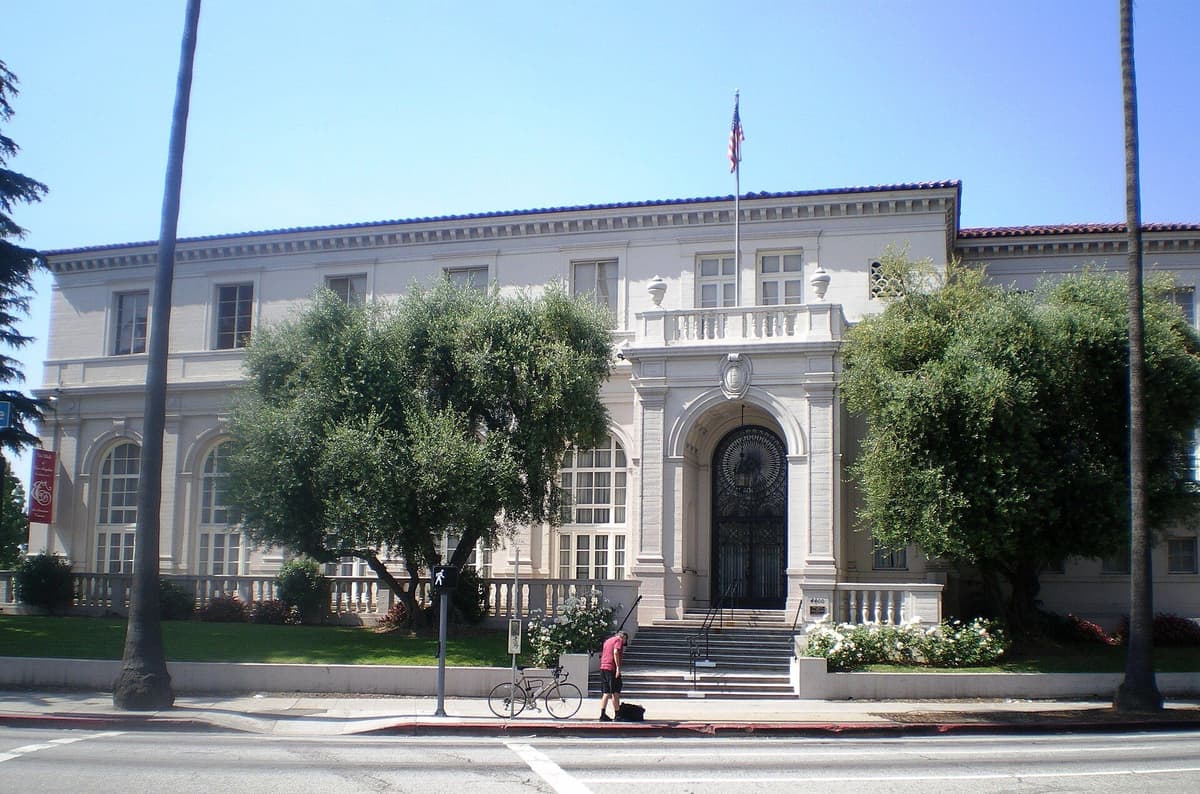
On September 27, doors and a red carpet open at 6 p.m. at the Wilshire Ebell Theatre in Los Angeles, with a curtain at 7. What the audience sees onstage will not have existed a day earlier. The Hollywood Rush is built, cast to cast, inside a single 24-hour window, and organizers describe the resulting shows as fast-paced and unpredictable. All proceeds go to FosterMore, a nonprofit focused on youth who have experienced foster care.
The event has run under that overnight structure for well over a decade. It has not always benefited the same cause, and it is only one date on a calendar of similar entertainment-industry fundraisers built around foster youth.
A Script Written Between Midnight and Sunrise
The process begins the night before the show, when writers are handed themes drawn from FosterMore's work and spend the overnight hours turning them into original one-act plays, finishing before sunrise. The next morning, directors join to review the new scripts. Actors arrive shortly after, and rehearsals run through the day.
Late in the afternoon, the cast breaks for hair, makeup and red-carpet preparation before that evening's performance of five or six one-act plays. Because the material is written and staged the same day, organizers recommend the show for audiences 16 and older, noting the content cannot be vetted in advance. Tickets for the 2026 show ranged from $46.65 to $377.45, per a BroadwayWorld ticket listing; the Ebell's own event listing separately describes the show as a members' event, with box-office and in-person sales handled on a different schedule.
The compressed timeline is the point. A cast that has had less than a day with its material is, by design, performing something closer to a first draft than a polished script — a constraint organizers have kept in place since the show's earliest years.
A Format Built for a Different Cause
The overnight write-rehearse-perform structure did not start with FosterMore. Coverage of the 2012 show, described at the time as the event's second annual staging, traces its creation to actress Zibby Allen, who built it to raise money and awareness for the Baby Dragon Fund at the Los Angeles Gay & Lesbian Center. That fund was established in memory of Allen's brother Hunter, who died by suicide in 2008 after struggling with addiction and depression.
In its second year, the show involved 40 celebrities producing ten-minute plays, according to that year's coverage; the first year's edition had raised $85,000 for the fund. The same overnight structure that once raised money in memory of Zibby Allen's brother now raises it for a cause with no connection to him at all.
The 2026 lineup benefiting FosterMore includes Tony Hale, Adam Shankman providing overall creative direction, Ben Falcone, Rachael Harris, Gloria Calderón Kellett, Peter Paige, Zibby Allen, Annie Gonzalez, Adam Faison, Angel Parker, Erinn Hayes, Lucy DeVito, Kandyse McClure and Kat Foster, with additional names added as the show approaches.
What FosterMore Does With the Night's Proceeds
FosterMore operates as a fund of the Entertainment Industry Foundation, a 501(c)(3) founded in 1942 that describes itself as the creative community's trusted partner in philanthropy and serves as fiscal sponsor for a roster of celebrity-linked funds, among them Olivia Rodrigo's Fund 4 Good, the Charlize Theron Africa Outreach Project and Stand Up To Cancer. That structure lets an entertainer or, in FosterMore's case, an advocacy effort raise and direct tax-deductible money without setting up its own nonprofit from scratch.
FosterMore itself was co-founded by Jennifer Perry and David Ambroz and works in partnership with Children's Action Network, where Perry also serves as executive director. FosterMore states its mission is to advance understanding of foster care, increase empathy and improve outcomes for the more than 300,000 children and youth it says are in foster care.
More than half of Americans mistakenly believe children enter foster care because of their own wrongdoing, according to polling cited in a profile of FosterMore co-founder Jennifer Perry. Perry has said that when the two organizations began their work, foster youth largely "lived in the shadows," and that the increased attention since has changed what people think about them — the premise behind pairing a celebrity theater night with the cause.
The Numbers Behind the Cause, and Where They Disagree
How many children the cause actually describes depends on which source is consulted. Kidsdata.org lists 59,172 California children and youth ages 0 to 20 in foster care as of July 1, 2018, a rate of 5.3 per 1,000. The Children's Law Center of California instead puts the statewide figure at more than 60,000, and separately says Los Angeles County alone has more than 25,000 foster youth in care, without giving a date for either figure.
FosterMore's own materials use a national figure, more than 300,000 children and youth in foster care, rather than a state or county number — meaning the statistic donors see when they give to Hollywood Rush is not the same one that describes the Los Angeles child welfare system the event and its cast are based in.
The gap between these numbers, and the fact that several of the pages citing them do not give a current-year count, makes it hard to say precisely how large California's or Los Angeles County's foster care population is today.
“The same overnight structure that once raised money in memory of Zibby Allen's brother now raises it for a cause with no connection to him at all.”
A Second Nonprofit Shares the Stage
The evening's youth-led segment comes from Kids in the Spotlight, a separate Los Angeles nonprofit founded by Tige Charity that teaches foster and other underserved youth ages 12 to 24 to write, cast and star in their own short films. Over 13 years, the group's Script-to-Screen program has produced 85 films, according to Fox 11's coverage of the organization, which also profiled 20-year-old first-time actor London Jones, who won Best Actor at the group's own film awards for a role he said helped him process his mother's death from cancer.
The nonprofit has drawn support from entertainment-industry figures including actor Ty Burrell, and it recently acquired a 5,330-square-foot production studio in Van Nuys, financed with help from Local Initiatives Support Corporation, including 0% interest financing on the down payment. LISC's account of the deal says the new space is projected to create more than 500 paid work opportunities a year and describes the goal as building a foster-care-to-career pathway that counters what it calls the foster-care-to-homelessness-and-prison pipeline. Fox 11's reporting also notes Kids in the Spotlight has been named a FosterMorey Organization of the Year, one point of overlap between the two groups' separate honors.
Pairing an established filmmaking nonprofit's own students with a celebrity-driven overnight play is, in that sense, less a one-off gesture than a way of connecting two organizations that already work the same cause from different angles — one through professional storytellers on a compressed clock, the other through the young people the money is meant to reach.
One Date on a Fuller Calendar
The Hollywood Rush is not FosterMore's only fixed date. The organization also holds the FosterMoreys Awards, a separate annual ceremony recognizing advocacy work in foster care. The 2023 winners included scholar Ash Fayal, content creator Mikey Doucet, business of the year La La Land Cafe, organizations of the year First Place for Youth and AdvoKids, and an impact award for Rich Valenza. The 2024 ceremony was scheduled as a virtual event on November 13 with the same categories, run partly by public voting; FosterMore's own recap page for that year does not list the eventual winners. The 2025 ceremony ran virtually on October 22 and was hosted by actor Cleo King, honoring a content creator of the year, an author of the year, four FosterMore scholars, Foster Kinship as organization of the year and the Savannah Bananas as business of the year.
The Wilshire Ebell Theatre supplies its own layer of institutional history to the Hollywood Rush's single night. It is the auditorium of the Ebell of Los Angeles, a women's club founded in 1894 whose Italian Renaissance-style clubhouse, designed by architect Sumner P. Hunt, opened in 1927, with the theater itself opening to the public that December. The 1,238-seat theater hosted Amelia Earhart's last public appearance before her fatal 1937 flight and is where Judy Garland was discovered performing as a child under her birth name, Frances Gumm. It was named a Los Angeles Cultural Historic Monument in 1982 and added to the National Register of Historic Places in 1994 — a fixture the entertainment industry has, across very different causes, kept returning to for one-night benefits.
More in Society
Film permits
What a $931 Los Angeles Permit Fee Leaves Out: FilmLA and City Department Charges
A standard-tier Los Angeles shoot pays a $931 permit fee, then separate FilmLA and city department charges, with tiers and timelines set by scope and location.
Sundance Institute
What a $3 Million Hearthland Gift Pays For at Sundance Institute, and What It Leaves Open
The multiyear gift funds the Feature Film Program, artist fellowships and unrestricted grants, and the Directors Lab's return to Sundance Mountain Resort in Utah.