
process
How a Look Is Planned Months in Advance
By the time a garment reaches a carpet it has been requested, negotiated, fitted and photographed repeatedly. Spontaneity is the one thing nobody can afford.
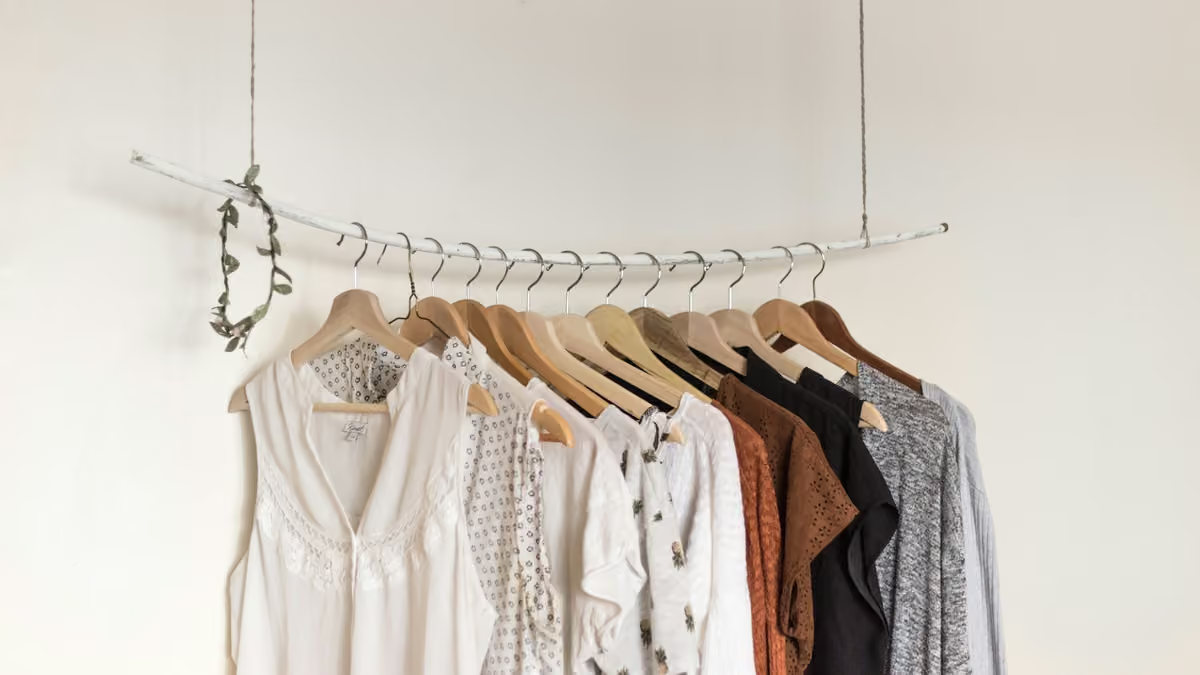
The appearance takes ninety seconds. The process behind it typically runs three to five months and involves more parties than most people would guess.
Requests begin before the collection exists
Stylists working at a senior level see collections at or before the runway, often through direct relationships with press offices. Requests are made against looks that have been shown but not produced, which means the earliest conversations concern garments that do not physically exist.
A request is not a booking. It registers interest, and the house decides later how to allocate. For a look with significant demand, the house is effectively choosing between clients, which is where relationships and contracts decide.
Holds and competing claims
A hold reserves a garment provisionally. Multiple holds on the same piece are common, ranked informally by the house.
This creates the situation stylists dread: a client planning around a look that is released to someone else. Experienced stylists therefore maintain parallel options throughout, and a client is frequently unaware that the look they eventually wore was the third choice.
For contracted ambassadors this is simpler — the contract generally guarantees access. For unsigned clients it is genuinely competitive.
Fittings
A serious look involves several fittings. The first assesses fit and proportion; subsequent ones refine. Couture alterations can amount to substantial reconstruction, and for a garment travelling internationally the timeline has to accommodate shipping in both directions.
Fittings are photographed extensively, because decisions are made against images rather than mirrors. A garment that reads beautifully in a room can photograph poorly, and the photograph is what will exist afterwards.
This is also where practical problems surface. Can the wearer sit? Get in and out of a car? Walk the distance involved? Remain in it for several hours? These sound trivial and end more looks than aesthetics do.
Coordinating everything else
The garment is one element. Jewellery must be secured, frequently from a different house with its own contract and security requirements. Hair and makeup are planned against the neckline and palette. Shoes must work with the hem and with the surface being walked on.
Each of these has a lead time, and each can force reconsideration of the others. A jewellery house declining a piece late can require rethinking a neckline decided weeks earlier.
Contingency
Professional operations plan for failure. Damage in transit, last-minute alteration problems, an event moved or a dress code changed — all occur regularly enough to be expected.
The standard is a second complete look held in reserve, fitted and ready. It is expensive and frequently unused, and the alternative is having no option at all on the day.
The day itself
The compressed final hours are the only part outsiders see any version of. Dressing, jewellery collection under security, steaming, and a final photographic check — usually in similar lighting to the venue, because carpet lighting is harsh and unflattering in specific predictable ways.
By the time the person steps out, every decision has been made and tested. What looks like an instinct is the surviving option from a long process of elimination.
Why it matters
The elaborate machinery exists because the stakes are commercial rather than aesthetic. Those photographs circulate for years, anchor a person's public image, and satisfy contractual obligations worth substantial money.
Spontaneity would be cheaper and more charming. It is simply not something anyone involved can risk.
More in Style
CFDA
Zane Li of Lii Wins the 2026 CFDA/Vogue Fashion Fund With $300,000 Prize
New York designer Zane Li, of the label Lii, won the 2026 CFDA/Vogue Fashion Fund on Oct. 20, with $300,000 and business mentorship for the winner.
Victoria's Secret
Victoria's Secret Brings Its Fashion Show Back to Los Angeles, Streamed Free on YouTube
Victoria's Secret staged its Fashion Show in Los Angeles on 18 October, the first time in 19 years, with veteran models, new faces, four musical acts and a free YouTube stream.