
craft
What a Costume Designer Actually Does
It is character work disguised as clothing, done to a schedule, on a budget, for people who will be photographed from every angle.
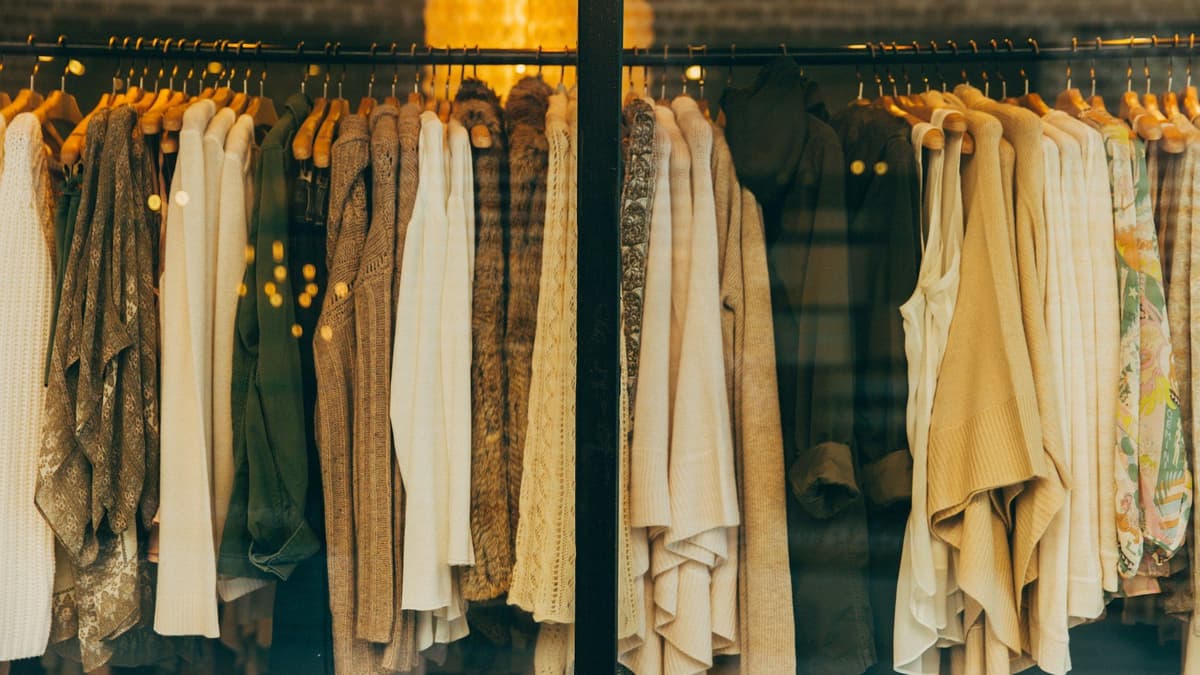
Costume design is routinely described as choosing the clothes, which is roughly like describing cinematography as pointing the camera. The role sits between character work, art direction and logistics, and the logistics are considerably heavier than the glamour suggests.
It begins with character, not clothing
The first work is reading — the script, then whatever historical or contextual research the material requires. The output is not a shopping list but a set of decisions about who each person is.
What can this character afford? What do they want to be seen as, and how well are they succeeding? What did they inherit? What do they own too much of? A character who buys expensive clothes that do not fit tells you something different from one whose cheap clothes fit perfectly.
These decisions are then translated into silhouette, texture, colour and wear. An audience reads all of it instantly and almost never consciously.
Building versus sourcing
Some costumes are made, some bought, some rented, most productions do all three.
Building gives control and costs time and money. It requires patterning, fittings and skilled makers, and for period work it may require fabric that has to be sourced or produced specially.
Sourcing is faster and constrains you to what exists. For contemporary work this is usually right, but it introduces its own difficulty: a recognisable current-season garment dates a film precisely, which may or may not be wanted.
Rental houses hold enormous archives, particularly for period and uniform work, and a designer's relationship with them is a genuine professional asset.
Multiples are the hidden work
Any costume involved in physical action needs duplicates. A shirt that gets torn needs several identical shirts, in staged conditions, so scenes can be shot out of order and repeated.
A significant action costume might exist in a dozen versions — clean, lightly damaged, heavily damaged, wet, and stunt versions built differently to accommodate padding or rigging.
This is a substantial proportion of the budget and almost invisible in the result, which is exactly the point.
Continuity
Films shoot out of sequence, so a costume worn across three scenes filmed weeks apart must match precisely. The costume department maintains detailed photographic records of every look, down to how a sleeve was rolled.
Errors here are permanent and highly visible to attentive viewers, and they cannot be fixed later except at expense. The record-keeping is unglamorous and is a large part of what the department actually does day to day.
Working with other departments
Costume is constrained by everyone. The cinematographer may reject a fabric that moirés on camera or a colour that fights the lighting. Production design and costume must agree a palette or the frame becomes noisy. Stunts need garments that accommodate rigging. Hair and makeup need necklines that work with a chosen style.
Much of the job is negotiation across these constraints, and a designer who cannot work collaboratively will produce beautiful costumes that damage the film.
The schedule problem
The compression affecting production generally has hit costume hard. Prep time has shortened while the volume of work has not, and a department that once had twelve weeks may now have seven for the same scope.
The consequence is more sourcing and less building, which narrows what is achievable. Designers describe this as the most significant change in the craft over the last decade — not budget exactly, but time, which for a made garment amounts to the same thing.
How to watch for it
The clearest sign of good costume design is that you formed an opinion about a character before they spoke. The second is that a costume changed meaningfully across a film in ways you registered without noticing.
The work that draws attention to itself is frequently the least sophisticated. The best of it is doing character work you experienced as intuition.
More in Style
CFDA
Zane Li of Lii Wins the 2026 CFDA/Vogue Fashion Fund With $300,000 Prize
New York designer Zane Li, of the label Lii, won the 2026 CFDA/Vogue Fashion Fund on Oct. 20, with $300,000 and business mentorship for the winner.
Victoria's Secret
Victoria's Secret Brings Its Fashion Show Back to Los Angeles, Streamed Free on YouTube
Victoria's Secret staged its Fashion Show in Los Angeles on 18 October, the first time in 19 years, with veteran models, new faces, four musical acts and a free YouTube stream.