
unions
What costume designers earn under IATSE's budget-tier pay rules
Costume designers earn different rates depending on production budget tier and city under IATSE Local 892 agreements. Learn how the union sets minimums across budget categories.
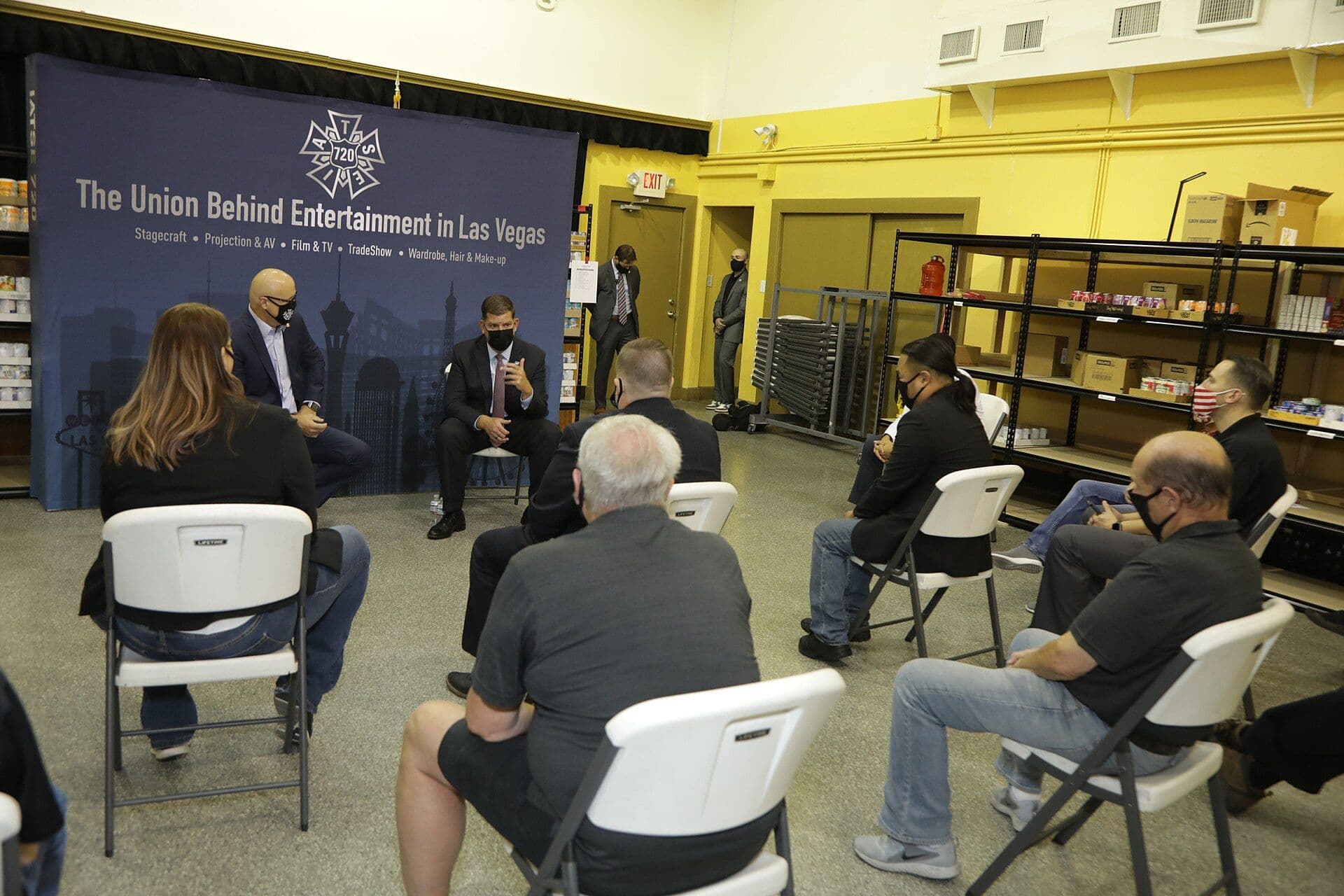
Costume designers in film and television work under two main agreements that set their pay: the Basic Agreement for studio productions and the Low Budget Theatrical Agreement for smaller-budget films. Both establish minimum day rates and fringe benefits, with rates that shift depending on where a production shoots and how much money funds it.
The pay structure reflects decades of negotiation and a major breakthrough in 2024. For decades, costume designers—87 percent female—earned 30 to 65 percent less than other creative department heads like production designers or cinematographers, roles dominated 82 to 93 percent by men. After a six-year coordinated campaign by the Costume Designers Guild, the 2024 IATSE negotiations with the Alliance of Motion Picture and Television Producers (AMPTP) delivered a wage increase of more than 40 percent that finally brought scale rates in line with peers.
The historical wage gap and why costume designers fell behind
The disparity between costume designers and other creative department heads was systemic. Costume designers weren't honored with their own Academy Award category until 1948, twenty-one years after the Academy Awards began, and full institutional recognition at the Academy came even later in 2013. This institutional lag—where costumes were often treated as crafts rather than creative direction—translated into contract structures that undervalued the role.
The gap widened over decades. Industry data compiled by the Costume Designers Guild showed that costume designers, a predominantly female profession in a male-dominated industry hierarchy, were positioned near the bottom of the IATSE pay scale despite their creative role equivalent to production designers and directors of cinematography. The Guild's data demonstrated that costume design department heads made nearly 45 percent less than male-dominated creative roles within IATSE's pay structure.
How the six-year campaign for pay equity worked
The Costume Designers Guild Local 892 Pay Equity Committee launched a systematic four-step action plan to close the gap. Members were asked to educate themselves and colleagues on the statistics and history of pay inequity, initiate conversations across departments about the disparity, negotiate directly by demanding parity with production designers in upcoming contract talks, and advocate publicly using the hashtags #CDGPayEquity and #NakedWithoutUs.
The campaign gained support from major labor and women's rights organizations including the National Organization for Women, Feminist Majority Foundation, and Equal Rights Advocates, which signed a solidarity letter ahead of the March 2024 IATSE negotiations with the AMPTP. Guild President Terry Gordon noted the breakthrough in negotiating power: "Our clearly defined CDG proposal demanding pay parity with our design team colleagues was recognized and rewarded."
The Guild also argued the economic case. Costume designs are reproduced as Halloween costumes, toys, computer games, and fashion collections without additional compensation to designers, as studios own all intellectual property rights to designs. Costume designers generate substantial post-release revenue streams for productions yet have historically received none of that benefit. This argument—that costume designers create valuable intellectual property—framed the pay equity push not as a favor but as correcting an economic injustice.
How studio rates work under the Basic Agreement
Under the IATSE Basic Agreement that covers studio and higher-budget productions, Local 892 costume designers earned a daily rate of $760.27 or a weekly rate of $2,968.69 under the 2025–2026 rate scale. A new rate chart took effect August 2, 2026, according to Local 892. These are uniform across all studio productions—the Basic Agreement does not tier costume designer pay by production budget the way it does for other departments. All costume designers receive the same pension contribution of 6 percent of wages or $10.60 per hour, regardless of budget size.
The wage increase of more than 40 percent from 2024 reshaped those minimums. Before the increase, costume designers were earning substantially less at scale than peers who did comparable creative work. The raise was calculated to compress that gap, bringing costume designer scale closer to what production designers and cinematographers earned under the same Basic Agreement. However, the Guild continues to fight for equal pay for assistant costume designers (ACDs), a lower tier of the role that still faces the original wage gap.
Budget tiers in low-budget productions
The Low Budget Theatrical Agreement, which took effect January 1, 2026 and runs through December 31, 2028, establishes five budget categories where pay scales adjust downward. The tiers are Ultra-Low Budget (projects budgeted at $3.3 million or less), Tier 1A ($3.3 million to $6.875 million), Tier 1B ($6.875 million to $9.9 million), Tier 2 ($9.9 million to $13.75 million), and Tier 3 ($13.75 million to $16.5 million).
The Low Budget Theatrical Agreement applies when productions fall below the threshold for the Basic Agreement. Costume designers working on these productions earn less than Basic Agreement rates, with pay scaled to each budget tier. In January 2026, all IATSE theatrical low-budget employees received a 3.5 percent wage increase, part of recurring annual adjustments built into the contract. These adjustments are scheduled to continue annually through 2028.
Unlike studio productions where costume designers can negotiate above scale, low-budget tiers set firm minimums that producers cannot undercut for union work. This protects designers on smaller productions from accepting below-scale pay even when budgets are tight. A producer working with a $5 million budget must pay at least the Tier 1A rate; a producer with a $2 million budget must pay at least the Ultra-Low rate. These minimums ensure that even independent productions and streaming content that operate on tight margins cannot create a race-to-the-bottom wage environment.
“Costume design department heads make nearly 45 percent less than male-dominated creative roles within IATSE's pay structure.”
Production cities and non-production cities
The Low Budget Theatrical Agreement recognizes a distinction between production city locals that have their own benefit funds and other locals, with different daily benefit rates applied to each. Production city locals receive higher daily benefit rates than non-production city locals.
The fringe benefits include pension contributions, health and welfare, and other union benefits that supplement the day rate. Under the 2026 rates, non-production city locals receive daily benefit rates roughly $7 to $33 lower than production city locals, depending on the tier. A costume designer working on a low-budget production in a non-production city will earn a lower total compensation package than one working on an identical budget tier production in a production city.
A production budgeted at $4 million falls under the Tier 1A rate regardless of shooting location; only the daily benefit rate differs between a production city and a non-production city, while the daily wage rate itself remains the same.
Who can work union and what that means for hiring
Not every costume designer works union—independent productions, streaming content, and regional productions often operate outside the union framework. But for designers seeking stable employment with benefits, union work under these agreements is the primary path. The rates and tiers set the floor for what union work pays, and they shape which productions can afford to hire union costume designers at all.
Producers weighing whether to use union costume designers consider both the day rate and total production budget. A $2 million ultra-low budget film budgeting for a costume designer at scale must account for several weeks of wages plus fringes. For some independent producers, this cost is prohibitive, pushing them toward non-union costume work. For others, the union guarantee of trained professionals and the reduced liability of union agreements justifies the cost. The rating system—defining productions by budget threshold—creates predictability for both producers and costume professionals on what they will earn.
More from Style
brand ambassadors
Why Gant Named Theo James, Not a Model, Its Fall 2026 Face
Gant names actor Theo James as ambassador for fall 2026. The appointment reflects a broader industry shift toward casting established film and television performers instead of traditional models.
Cover Stars
Monique Lester's Career in Frames: Playboy, Magnifiqué and a Brand of Her Own
From her first shoots at 12 to Playboy and a 2025 Magnifiqué cover by Richard Lancaster, Monique Lester's career is now heading into lingerie design.