
Tariffs
What a February Supreme Court Ruling and July 24 Section 301 Duties Mean for Imported Fabric
A February Supreme Court ruling, open refund questions and July 24 Section 301 duties now set what imported fabric and garments cost at the U.S. border.
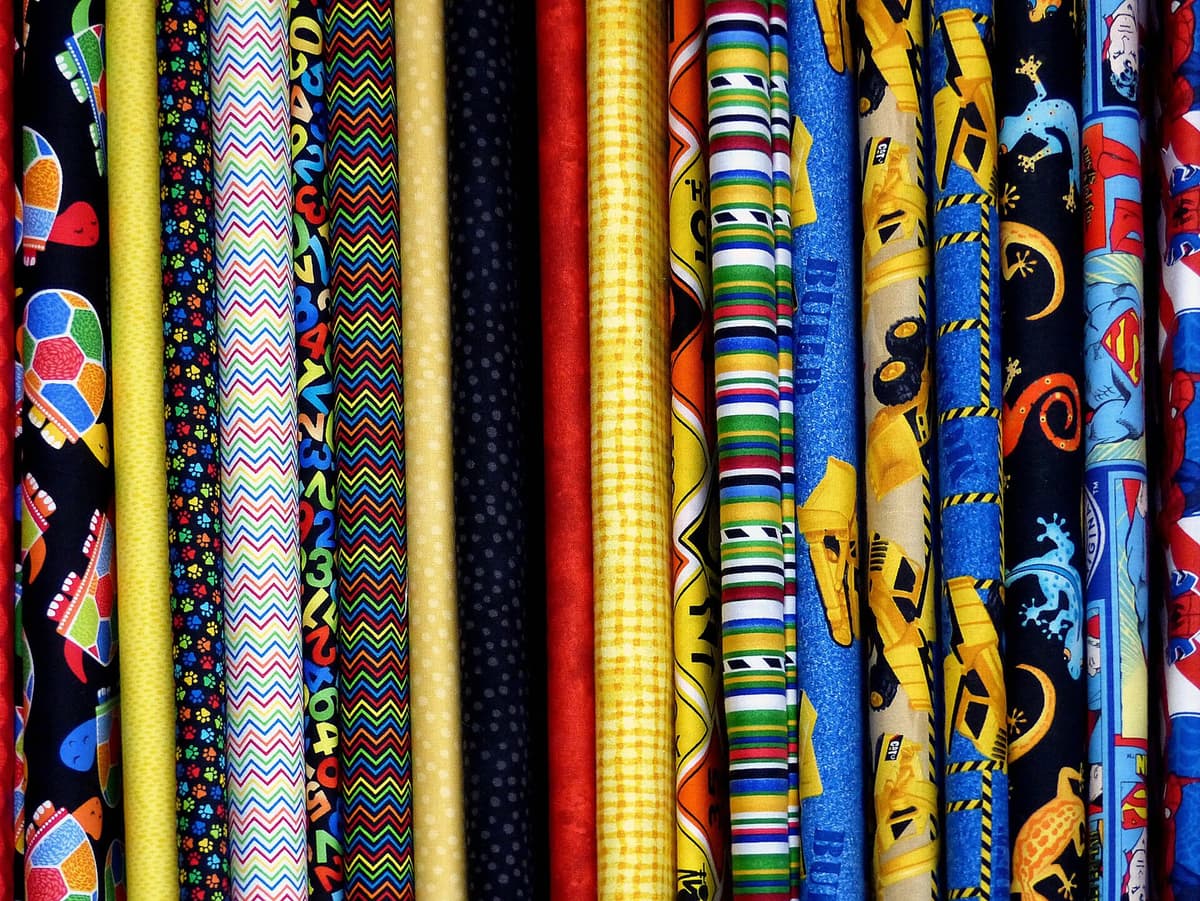
Costume departments buy fabric, trims and finished garments from makers around the world, and the duty on those goods follows U.S. trade rules. Those rules changed more than once in 2026. In February the Supreme Court removed one set of tariffs, and in late July a new set took effect.
The link to costume budgets comes from a February 2025 report on tariffs that the Trump administration had announced, covered in the fifth section below. The duty on an imported item depends on where it was made, which rate tier applies and whether an exclusion covers it.
The February Ruling Removed the Emergency Tariffs
On Feb. 20, 2026, the Supreme Court ruled in Learning Resources, Inc. v. Trump, a case consolidated with Trump v. V.O.S. Selections, Inc. (No. 25-250), that the International Emergency Economic Powers Act (IEEPA) does not authorize the president to impose tariffs. Chief Justice John G. Roberts wrote the opinion, according to DLA Piper's summary of the decision.
The ruling covered two sets of duties: the tariffs described as drug trafficking tariffs on goods from Mexico, Canada and China, and the reciprocal tariffs announced in April 2025 that applied to goods from jurisdictions worldwide. The ruling does not affect tariffs under Section 232 or Section 301, DLA Piper says.
U.S. Customs and Border Protection said it would stop collecting the IEEPA duties effective 12:00 a.m. ET on Feb. 24, 2026.
Refunds Are Likely, but the Route Is Unsettled
DLA Piper says importers who paid the IEEPA duties will likely be entitled to refunds. The Court did not address remedies, so the process remains uncertain. The case was remanded to the Court of International Trade, where it is unresolved which parties may obtain judicial relief.
Some businesses may file suits at the Court of International Trade to preserve their refund rights. The government told that court it would not oppose reliquidation of entries already liquidated in cases before it. It is unclear whether the government will take the same position for importers that are not litigants.
CBP has stopped issuing paper checks. Refunds will generally be paid electronically through the Automated Clearing House, with limited exceptions, and importers are encouraged to enroll for electronic refunds.
A 10% Surcharge Ended and Section 301 Duties Took Its Place
The global 10% tariffs under Section 122 expired at 12:01 a.m. ET on July 24, 2026. New tariffs under Section 301 took effect at that same moment, according to Kelley Drye's summary of the U.S. Trade Representative's final action, issued July 23, 2026.
That action covers 60 economies investigated on whether they have implemented and effectively enforced a forced labor import prohibition. Goods loaded onto a vessel and in transit before 12:01 a.m. ET on July 24 are exempt if they are entered or withdrawn from warehouse before 12:01 a.m. ET on July 28, 2026.
The new rates are tiered by country, and the tiers handle the standard rate, known as MFN, in different ways. The EU and Taiwan pay a 10% total that includes MFN. Bangladesh, Cambodia, Indonesia, Malaysia, Mexico and the United Kingdom pay 10% on top of MFN. China and Vietnam pay 12.5% on top of MFN. Japan, South Korea and Switzerland pay 12.5% in total. The summary lists other economies in each tier; this article names only those mentioned here.
Several countries changed tiers between the June 2 preliminary proposal and the final action. The EU and Taiwan went from 10% plus MFN to 10% total, and Japan, South Korea and Switzerland went from 12.5% plus MFN to 12.5% total.
The rates are country-wide, with certain exceptions.
A Textile Quota Covers Four Countries, With No Start Date Set in July
The textile and apparel tariff-rate quota applies to Bangladesh, Cambodia, Indonesia and Malaysia. Volumes within the quota would not be subject to the Section 301 duties. Each country's quota will be set as soon as feasible, based on its imports of U.S. inputs, and the initial term is three years.
As of the July action, no start date had been set. Until the TRQs are established, the applicable tariff rates described above apply to these textiles and apparel.
Several categories sit outside the new rates. Textiles and apparel entering duty-free under CAFTA-DR from Costa Rica, the Dominican Republic, El Salvador, Guatemala, Honduras and Nicaragua are excluded. So are USMCA-compliant goods from Canada and Mexico, articles and parts subject to Section 232 tariffs, informational materials, donations and accompanied baggage.
USTR also added 471 products to the exclusion lists beyond those in its June 2 proposal. The global exemptions rest on four criteria: raw materials that, if tariffed, could make domestic supply unavailable, products that could cause economy-wide disruption, products not available in sufficient quantity or at reasonable prices elsewhere, and products for which tariffs may not be effective.
Separate country-specific exemptions reward commitments to adopt or enforce forced-labor import bans. The summary lists Argentina, Bangladesh, Cambodia, Ecuador, El Salvador, the EU, Guatemala, Indonesia, Jordan, Malaysia, Switzerland, Taiwan and the UK. Some exemptions are limited to uses such as pharmaceutical applications and civil aircraft.
“The duty on an imported item depends on where it was made, which rate tier applies and whether an exclusion covers it.”
What the 2025 Trade Report Said About Costume Budgets
A CNBC report by Sarah Whitten, published Feb. 3, 2025 and carried on NBC Los Angeles's site, looked at tariffs on Canadian and Mexican goods and on Chinese goods. Unnamed industry insiders said tariffs could put pressure on production budgets for productions that import certain textiles for costumes or unique construction materials, such as specialty glass.
The report also said most studios buy materials locally, and that it is rare for a Los Angeles set to import lumber from Canada. Productions shot in other countries mainly use local supplies or ship materials from the U.S.
Rented equipment such as lighting and cameras comes from studio warehouses on lease for the shoot, which partly shields production costs from the tariffs. Catering food could become slightly more expensive, but this is unlikely to change budgets significantly.
The report raised box-office concerns as well. Higher prices could squeeze consumers, and trips to the theater could be among the expenses that get cut, while Hollywood was still recovering from pandemic shutdowns and labor strikes. Canada, a major production hub, was also a concern because insiders worried a trade fight could prompt Canadian retaliation against film productions. Canadian Prime Minister Justin Trudeau's post on X promised a response to the tariffs.
This report predates the February 2026 ruling and the July 2026 action. The duty on a production's imports depends on the rates and exceptions described above.
Three Points Still Unsettled
Three points remained open as of July 2026. How refunds reach importers that were not parties to a case is unclear. The textile quota had no start date in July. The rate for any imported garment or fabric depends on its country of origin and on whether one of the exclusions applies.
The July action does not address a 25% tariff on Brazil announced July 22, or a pending excess-capacity investigation covering 16 economies, according to Kelley Drye. The summary expects remedies from the other investigations to stack on top of the remedies announced here for economies subject to multiple investigations.
Rates may also change. The summary says USTR may modify rates for countries that adopt or commit to forced-labor import bans. As of that summary, 13 countries had such bans, up from three when the investigation began in March.
More in Style

Nike
Nike Becomes Formula 1's Official Apparel Supplier From 2027, Replacing Puma
Formula 1 announced in Las Vegas that Nike will supply staff uniforms and fan apparel from 2027. Terms were not disclosed, and a Las Vegas capsule went on sale Nov. 20.
Fashion Collaborations
Marimekko's Popkorni Print Comes to Two Veja Sneaker Models, on Sale From Nov. 12
Marimekko's Popkorni print appears on two Veja sneaker models, available from 12 November 2026 per the companies' September release and later trade reports.
- Loewe Sets Nov. 12 Launch for Disney and Tim Burton Nightmare Before Christmas Line
- Why a 2017 Cheerleading Uniform Case Decides Which Parts of a Garment Qualify
- How FTC Endorsement Rules Apply When a Designer Lends or Gifts a Look
- Capri Raises Full-Year Outlook as Jimmy Choo Grows and Michael Kors Falls