
costume design
Why California's SB 253 Is Forcing Costume Departments to Track Emissions
California's emissions reporting law and studio commitments are forcing costume and wardrobe teams to rethink how they source, clean and dispose of garments.
Costume and wardrobe departments have historically been evaluated on creative output—fabricating garments, managing quick changes, and ensuring visual continuity. But a combination of regulatory pressure, studio commitments, and environmental initiatives is transforming how these departments operate. Productions must now balance artistic needs with emissions tracking, waste reduction targets, and compliance with California's climate disclosure law.
For decades, costume departments treated garment sourcing, fabrication, and disposal as separate from the studio's environmental footprint. That changed when large studios began committing to net-zero emissions targets and California enacted SB 253, requiring companies with over $1 billion in revenue to report greenhouse gas emissions starting in 2026. The law captures not just energy use on set, but Scope 3 emissions—the indirect emissions embedded in purchased goods and services, including costumes and wardrobe items. For studios, this means wardrobe decisions that once seemed purely creative now carry compliance implications.
Understanding the Regulatory Framework
California's SB 253 creates three reporting tiers under the greenhouse gas protocol. Scope 1 covers direct emissions from on-site energy and company vehicles. Scope 2 encompasses emissions from purchased electricity, steam, and heating. Scope 3—the largest and most complex category—includes indirect emissions from the entire value chain: equipment rental, crew commuting, material purchases, and waste management.
For costume departments, Scope 3 is the critical category, since costume and wardrobe purchases and rentals fall within it. Though these emissions occur outside a company's direct control, they can represent the largest portion of its overall greenhouse gas inventory, with costume, wardrobe, and set purchases among the contributors.
The initial deadline for SB 253 Scope 1 and 2 reporting is August 10, 2026, covering fiscal year 2025 data. An estimated more than 5,000 companies are affected by the law, including major studios and production entities headquartered outside California that do business in the state. Scope 3 reporting, which directly implicates wardrobe decisions, is deferred to 2027. This staggered timeline gives studios time to model their supply chains and costume sourcing practices, but the clock is already running.
What Film Production Actually Wastes
The environmental impact of film sets extends far beyond what reaches the screen. Big-budget films average approximately 3,370 metric tons of carbon dioxide emissions, according to a 2021 report by the Sustainable Production Alliance. A separate BAFTA Albert study of more than 2,500 U.K. productions found that travel and transport account for roughly 65 percent of a production's total footprint, while energy use contributes 21 percent. For costume departments specifically, the impact comes from both fabrication—the energy and materials embedded in new garments—and operational costs like weekly cleaning required by union rules.
The art department, responsible for constructing physical sets, is frequently the largest contributor to waste generation. Over a period tracked by the study, approximately 800,000 tons of materials from UK productions were sent to landfill—roughly equivalent to half the volume of the Melbourne Cricket Ground. Sets are typically discarded after filming due to tight budgets, intellectual property concerns, design specificity, and expensive storage costs.
Costume departments face similar pressures. Fabricating original garments for background actors, principal characters, and standby pieces generates significant textile waste, particularly when productions work on tight shooting schedules that make reuse difficult. A single feature film might require many custom-made background costumes worn for only a few takes. When production wraps, these items are often discarded rather than stored or donated, especially if they carry intellectual property concerns or require expensive storage.
The Rental Market as Economic and Environmental Solution
The shift toward sustainability has made costume rental more common for studios. Large production companies increasingly draw on costume warehouses that hold pieces from past productions, letting designers source looks without fabricating new garments from scratch. Some high-budget productions have also begun piloting blockchain technology to track wardrobe items, making it easier for studios to rent, swap, or donate pieces rather than build them anew.
Large production companies maintain costume warehouses in major production hubs, allowing wardrobe departments to recycle garments across projects. These facilities largely stock period pieces, and industry professionals have called for expanding their collections to include more contemporary clothing, reducing the need for fabrication. However, the practice remains inconsistent across the industry. Without universal sustainability mandates from industry associations or studios, compliance depends on individual production companies' commitments and the demands of financiers or distributors. Independent productions and lower-budget projects often continue making new costumes due to cost barriers to entry into rental networks.
Union Rules, Energy Use, and Operational Constraints
Union rules mandate that costumes be cleaned at least weekly. This creates a baseline operational burden that productions cannot avoid. The weekly cleaning cycle, multiplied across many costumes and multiple productions, creates ongoing energy consumption that extends far beyond the fabrication phase.
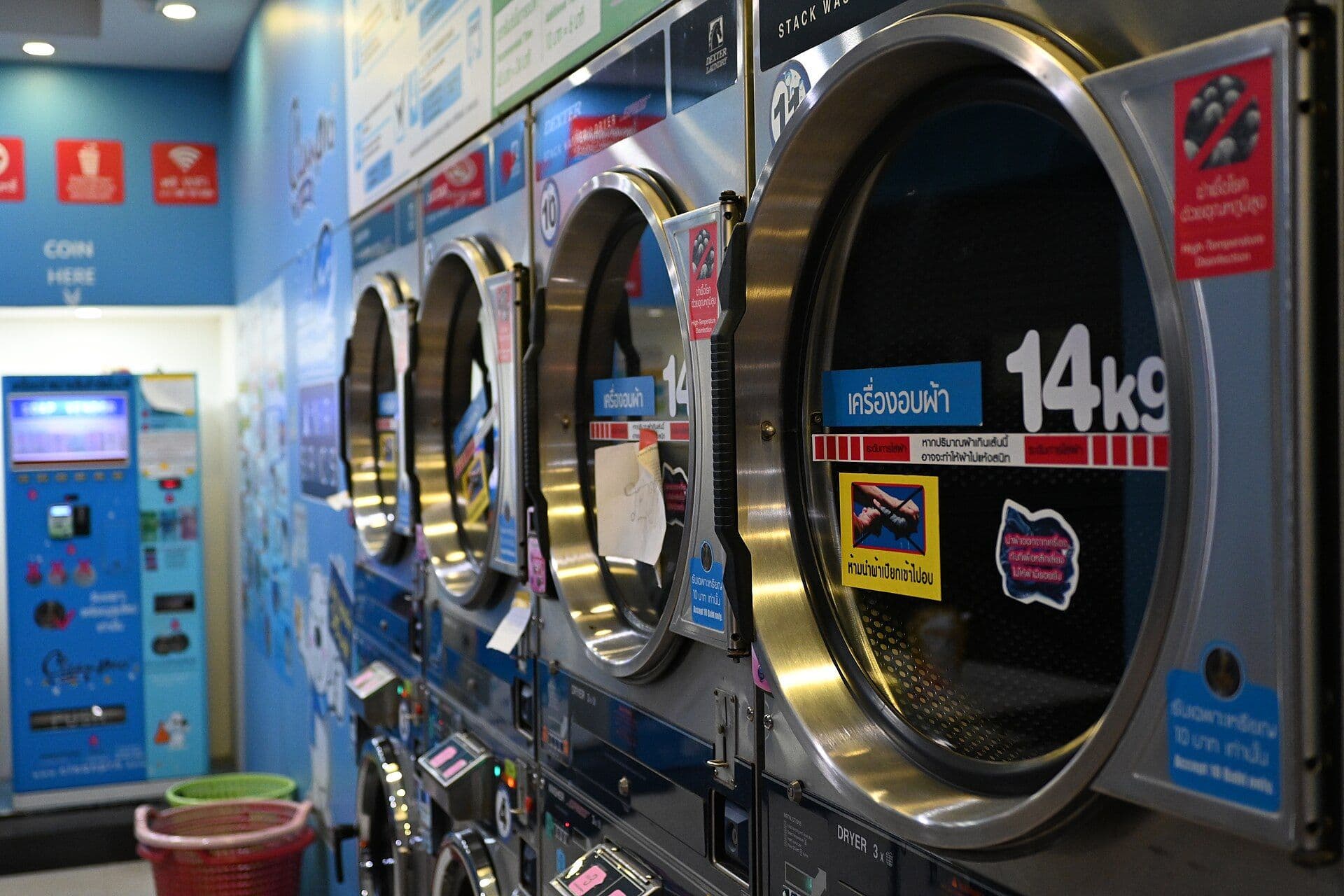
Productions implement energy-efficient measures to manage this operational burden: using Energy Star–certified washing appliances, cold-water cycles, and PERC-free dry cleaning alternatives. The cost of cleaning itself is substantial; the union requirement effectively locks productions into ongoing environmental impact. A production cannot simply stop washing costumes to reduce energy use, but it can choose the method and equipment. This intersection between union obligations and environmental responsibility creates a tension that productions are only beginning to address systematically.
Some productions now use PERC-free dry cleaning methods, which eliminate perchloroethylene, a chemical linked to health and environmental concerns. Cold-water washing cycles reduce energy consumption significantly. These operational changes represent the most direct lever wardrobe departments have for reducing their carbon footprint in the short term, separate from sourcing decisions about new versus rented garments.
“Scope 3 emissions—the indirect emissions embedded in purchased goods and services, including costumes—are outside a company's direct control, yet they can represent the largest portion of its greenhouse gas emissions.”
Studio Commitments and Industry-Wide Standards
Major studios have committed to net-zero emissions targets that cascade down to production departments. Netflix targets 45 percent internal emissions reduction by 2030 using science-based targets and aims for net-zero greenhouse gas emissions. NBCUniversal (via parent Comcast) committed to carbon neutrality by 2035 across Scope 1 and 2 emissions globally, covering productions, theme parks, and facilities. Sony Pictures participates in parent company Sony's 'Road to Zero' plan, which targets zero environmental footprint by 2050 with five-year measurement checkpoints.
These commitments require wardrobe departments to submit sustainability plans before production begins. These plans typically prioritize renting and vintage costumes, document cleaning methods, document carbon tracking, and outline post-production disposal strategies. Organizations like Earth Angel facilitate textile donations and recycling, with a stated priority of donating reusable clothing items before pursuing other disposal methods.
Despite this increased attention from studios, the industry has not yet established universal sustainability standards for costume departments. Implementation varies significantly between major studios with dedicated sustainability consultants and smaller productions that treat sustainability as an afterthought, constrained by budget and schedule. The absence of binding requirements means that some productions meet rigorous emissions targets while others operate with minimal environmental oversight.
When Sustainability Becomes Economical
Renting and upcycling costumes can reduce both waste and cost compared with fabricating new garments, particularly for background actors and supporting characters, where visual distinctiveness matters less than it does for principal cast. Drawing on existing costume warehouses instead of building new pieces avoids some of the costs of fabrication, storage, and disposal, while reducing the Scope 3 emissions tied to costume purchases.
For costume departments, the challenge is less about whether to incorporate rental and upcycled pieces than how to weave that practice into complex productions that still require custom fabrication for certain roles and sequences.
The regulatory framework under SB 253 and the net-zero commitments from major studios are adding both a mandate and an incentive to make sustainable sourcing more central to wardrobe decisions, even as the industry has yet to adopt binding, universal standards for how far that shift must go.
More from Style

costume design
How a studio slowdown is closing legendary costume rental houses
Costume Rental Corporation's closure after 50 years reflects a crisis for below-the-line wardrobe vendors amid a sustained Los Angeles production slowdown.

product placement
How fashion brands actually get into major films and television
The process requires months of advance planning and careful alignment between production teams and brand executives, with costume designers holding the power to approve which brands appear on screen.