
This feature was produced as part of a paid editorial partnership.
Profile
How Samah Langner Moustafa Is Turning Finance Into a Growth Engine
The Group CFO of Go Behavioral and founder of Revnexa on scaling organizations with smarter financial strategy, strong governance and leadership that outlasts the quarter.

There was a time when a company's finance chief was the person who closed the books, signed off on the budget and said no. Samah Langner Moustafa has spent her career arguing for a different job description. As Group Chief Financial Officer of Go Behavioral and the founder of the healthcare finance firm Revnexa, she treats finance as the place where a growing organization decides what it is going to become, and she has built her working life around proving that the numbers are only useful once someone turns them into direction.
It is a timely argument. Businesses are contending with economic swings, shifting regulation and technology that rewrites processes faster than most teams can document them. In that climate, leadership teams no longer want a finance department that simply reports what happened last quarter. They want one that can tell them what to do next, and whether the organization can afford it.
A CFO's remit, redrawn
At Go Behavioral, Moustafa oversees financial strategy across multiple business entities. The portfolio is broad: budgeting and forecasting, compliance, payroll, employee benefits, operational finance and the executive decisions that sit on top of all of them. What distinguishes her approach is less the scope than the posture. She works alongside the executive team rather than downstream of it, translating financial data into the kind of insight that shapes where the company grows, where it becomes more efficient and how it performs as a whole.
Her governing idea is that finance should never operate in isolation. In her view it is a strategic partner to every other department, one that helps each of them make better decisions while creating durable value for employees, clients and stakeholders. She likes to frame it in narrative terms: every financial report tells a story, every budget opens a set of opportunities, and every decision carries the potential to alter an organization's future.
Building Revnexa
That conviction led her to start something of her own. Alongside her executive role, Moustafa founded Revnexa, a company dedicated to helping healthcare organizations strengthen financial performance, operational efficiency, compliance and revenue cycle management. Healthcare is a sector where money, regulation and patient care are unusually entangled, and where a weak back office can quietly undermine good clinical work.
Through Revnexa she designs practical financial systems intended to make complicated business problems simpler to manage. The emphasis is on frameworks an organization can actually live with: tools that support innovation and sustainable growth rather than adding another layer of process for its own sake.
From technical mastery to strategic voice
Moustafa's grounding is classical. She built her early career on accounting, financial reporting, taxation, auditing and corporate finance, the technical disciplines on which any finance leader's credibility rests. But as she advanced, she came to see that technical fluency was necessary and not nearly sufficient. The finance leaders who make a real difference, she concluded, understand the people, the operations and the strategy behind the figures as thoroughly as they understand the financial statements themselves.
Geography sharpened that lesson. She has worked across different countries and business environments, and each move brought unfamiliar regulations, technologies, cultures and ways of doing business. Rather than treating those transitions as disruptions, she approached each as a chance to deepen her expertise and widen her perspective. That habit of continuous adaptation still shapes how she leads.
Scaling without losing the thread
One of the defining chapters of her career has been supporting the rapid expansion of Go Behavioral. Growth is flattering to a company and punishing to its finance function. As operations multiply, so does complexity, and compliance, reporting, payroll, forecasting and financial controls all have to stretch across a larger and less tidy organization. Managing that takes discipline, collaboration and careful planning.
The experience confirmed something she already suspected: sustainable growth is built on strong systems, clear communication and thoughtful leadership, not on chasing short-term results. Among the achievements she is proudest of are the financial frameworks she has built to let organizations scale without giving up transparency, accountability or operational excellence.
Changing what finance is for
Throughout, Moustafa has worked to change how finance is perceived inside the organizations she serves. Too often, she observes, it is regarded as the department whose only function is to hold down expenses. She believes its real purpose is considerably larger: to enable innovation, identify opportunity, manage risk and give leadership teams the information they need to make confident decisions with long-term consequences.
Earning the trust of executive leadership, and a seat in the strategic conversations that set a company's direction, ranks among the accomplishments that matter most to her. So does mentoring. She counts guiding colleagues as one of the most rewarding parts of her work, on the grounds that shared knowledge has an effect that reaches well beyond any single financial result.
Technology, and what it cannot replace
Artificial intelligence and automation are already reshaping finance, and Moustafa does not dispute their value. Technology, she acknowledges, improves speed and efficiency. But she is firm that integrity, ethical judgment, transparency and human leadership will remain essential however capable the software becomes. Trust, in her account, is built through thoughtful leadership and responsible decision-making, and no system can do that on a leader's behalf.
The next chapter
Looking ahead, she is committed to growing Revnexa into a globally recognized healthcare financial consulting company. She also plans to publish further leadership insights, contribute to respected business publications, take part in international conferences and mentor the next generation of finance professionals. Continuous learning, for her, is less a professional obligation than a lifelong commitment, and the thing that keeps a leader relevant as the business environment keeps changing.
Her advice to people starting out follows the same principles that shaped her own path. Success rarely arrives overnight. It is assembled through consistency, resilience, discipline, curiosity and a steady commitment to personal growth. Every challenge is a chance to learn, she says, and every setback can become the foundation for what comes next.
For Samah Langner Moustafa, financial leadership was never really about managing numbers. It is about building stronger organizations, equipping people to succeed and creating systems that keep delivering value for years. In a business culture that often mistakes speed for progress, her career makes a quieter case: that modern finance, practiced with strategy, rigor and a long view, can be one of the most powerful engines of transformation a company has.
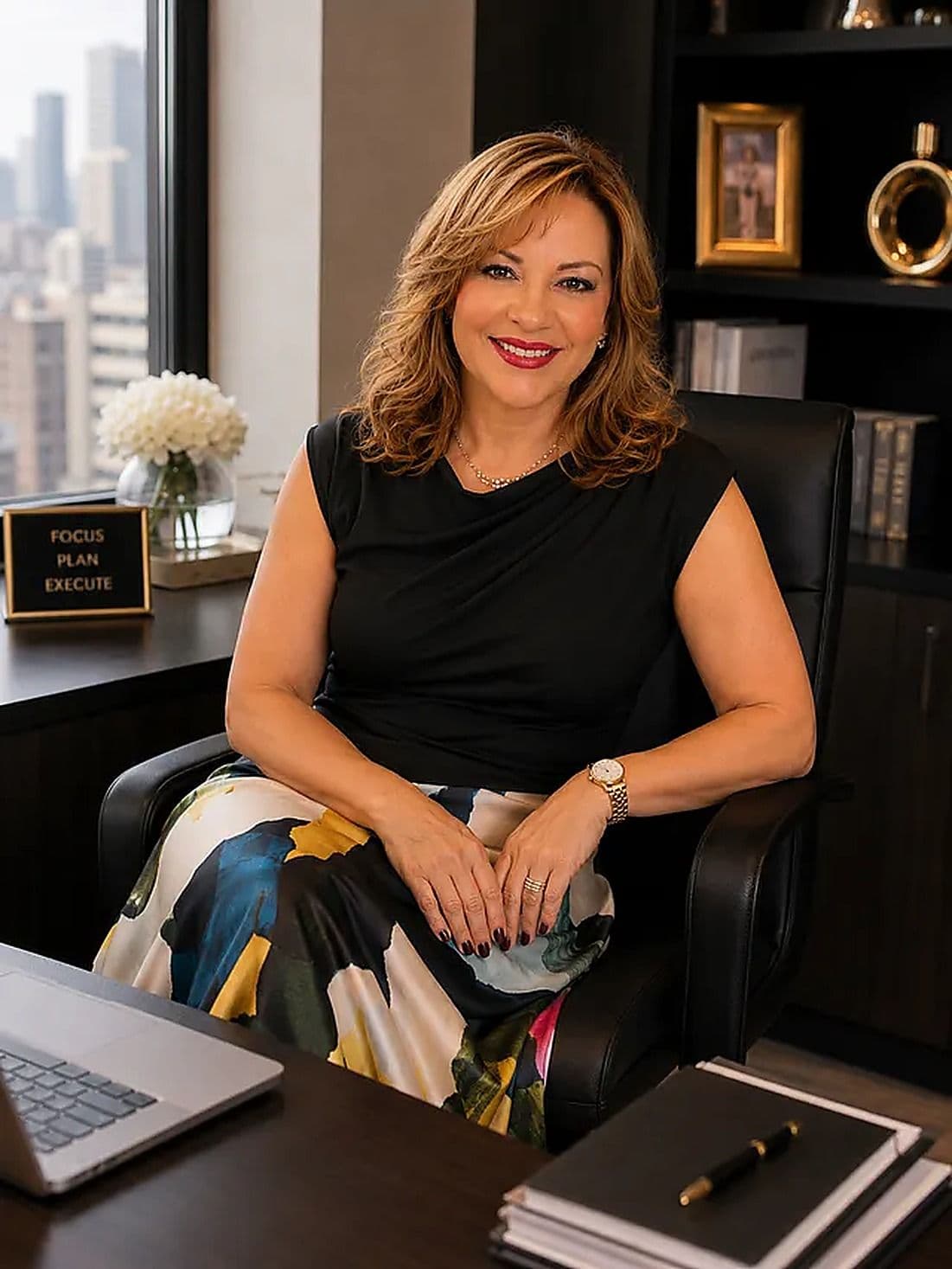
The person in this story
More from Profiles

shift
The Long Interview Is Coming Back
Audiences have demonstrated an appetite for two-hour conversations. Publications are relearning something podcasts proved.

editorial
What Makes a Subject Worth a Profile
Fame is not a reason. The pieces that endure are commissioned on a question rather than an occasion.