
Tax Credits
Newsom Proposes Raising California's Film and TV Tax Credit to at Least $1 Billion a Year
It is a proposal.
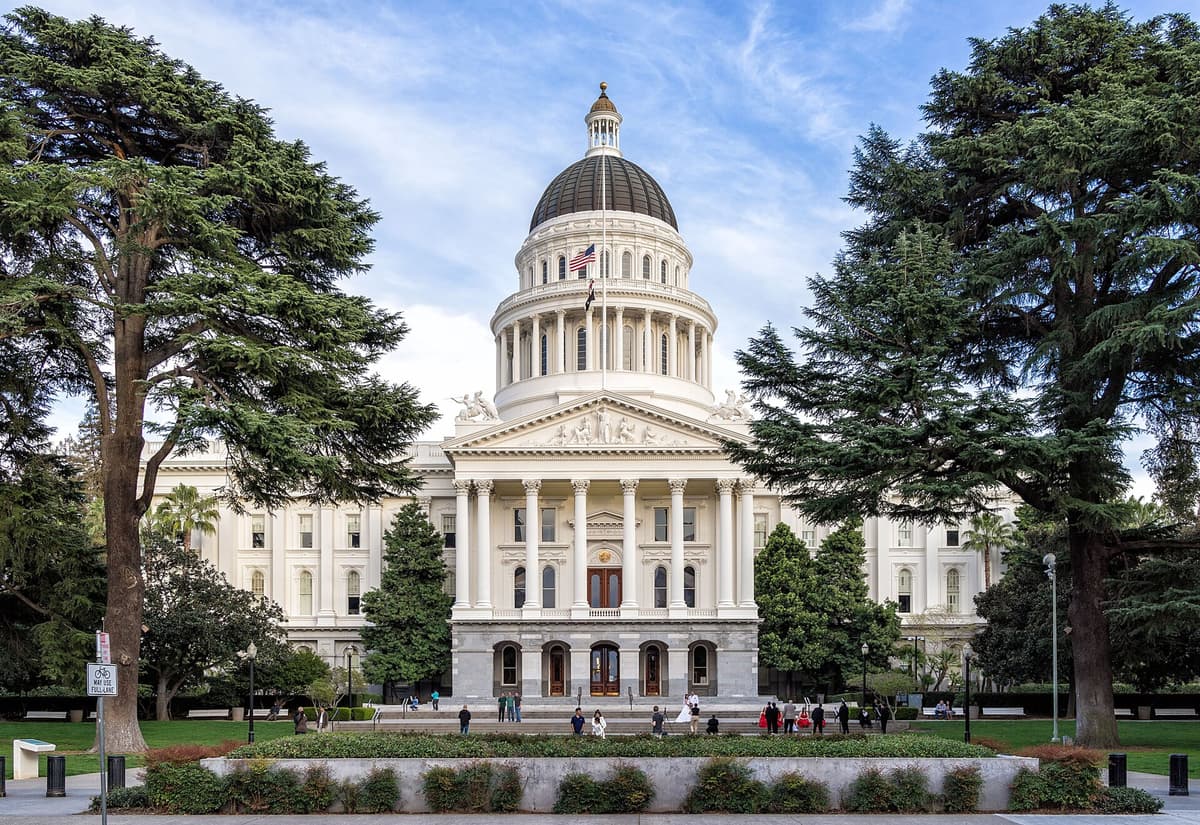
Gov. Gavin Newsom proposed to raise California's annual film and television tax credit from $750 million to at least $1 billion. The governor's office said that would make it the largest capped credit in the nation.
The proposal would also allow above-the-line talent pay to qualify, add a bonus for multi-project commitments and extend the program through 2040. It is a proposal, not yet law.
What the Proposal Changes
The governor's office listed four changes beyond the larger annual pool.
First, above-the-line expenditures, including talent compensation, would become eligible, "subject to appropriate funding caps." Second, independent films would receive $100 million a year, up $26 million from the current level.
Third, companies that commit to at least two qualifying productions in California would receive a 5% credit boost. Fourth, the tax credit would be extended through 2040.
The Expanded Program's First-Year Record
The proposal builds on the expansion Newsom signed in Burbank on 2 July 2025, according to CBS News Los Angeles. That law raised the annual credit from $330 million to $750 million, and the governor's office describes it as a $3.75 billion investment over five years through 2030.
The governor's office reported that applications rose 82% in the first year of the expanded program. It counted more than 8,600 California filming days, including 1,823 out-of-zone days.
Direct production spending reached $8.25 billion to date, the office said, including $5.3 billion in qualified expenditures and $3.2 billion in qualified wages.
Film shoot days rose 52% and television shoot days rose more than 7%, the office said. It also counted 261,000 background performer days and more than 43,000 cast and crew jobs created in the first year.
Productions backed by the program won 21 awards across six shows at the 2026 Emmys, the office said. Those included Outstanding Drama Series for The Pitt.
Why the Competition Matters
TheWrap reported in June 2025 that only about 20% of U.S. movie and TV production was then made in California. It cited FilmLA data showing 2024 was the worst year on record for local filming.
The same report said the state film commission estimated California lost $1.6 billion in production spending from 2020 to 2024 because of limited credit funding. TheWrap noted that Louisiana had passed a bill raising its base rate to 25% and New York had raised its cap to $800 million.
The governor's office cites past returns of $24.40 in economic output, $16.14 in GDP and $8.60 in wages for every $1.00 of credit awarded. Those are the administration's figures.
“The governor's page for the new proposal gives no schedule for state action.”
Federal Backing and What Happens Next
Newsom also called on Congress to pass the Motion Picture, Television, and Entertainment Revitalization Act by the end of the year. The governor backs federal legislation for a 20% federal film and TV credit that could stack with state programs. In the governor's words, "states can't shoulder the cost alone."
Dee Myers, the governor's senior advisor and director of GO-Biz, said expanding the credit would make California more competitive for the productions, talent, and investment that drive this industry. Assemblymember Rick Chavez Zbur said the earlier expansion was "bringing back tens of thousands of jobs in its first year."
The 2025 expansion needed lawmakers' approval before Newsom signed it, and TheWrap reported at the time that its timing was uncertain amid a projected $12 billion deficit. The governor's page for the new proposal gives no schedule for state action.
More in Culture
Live Nation
Why the Live Nation Verdict Puts Ticketmaster's Future Before a Judge
A jury found Live Nation and Ticketmaster ran an illegal concert ticketing monopoly. If the verdict stands, the judge must set the remedy, and the states want Ticketmaster sold.

Box Office
Clayface Opens to $24 Million Domestic and $43 Million Worldwide From 3,458 Theaters
DC Studios' Clayface opened at No. 1 with $24 million domestic and $43 million worldwide over Oct. 23–25, 2026, from 3,458 domestic theaters.
- Kendrick Lamar in 2026: The Most-Awarded Rapper in Grammy History Plots His Next Move
- Grammy Releases From Aug. 31, 2025 to Aug. 28, 2026 Qualify for the 69th Awards
- Other Mommy opens to an estimated $27.5 million, The Social Reckoning to $5.5 million
- What G, PG, PG-13, R and NC-17 Mean, and How to Appeal a Rating