
WGA
Writers can protest a studio's proposed credit; a three-member WGA committee decides
Under WGA rules, the studio proposes writing credits, writers can protest, and a three-member committee decides. Producers and directors face a higher bar on original screenplays.
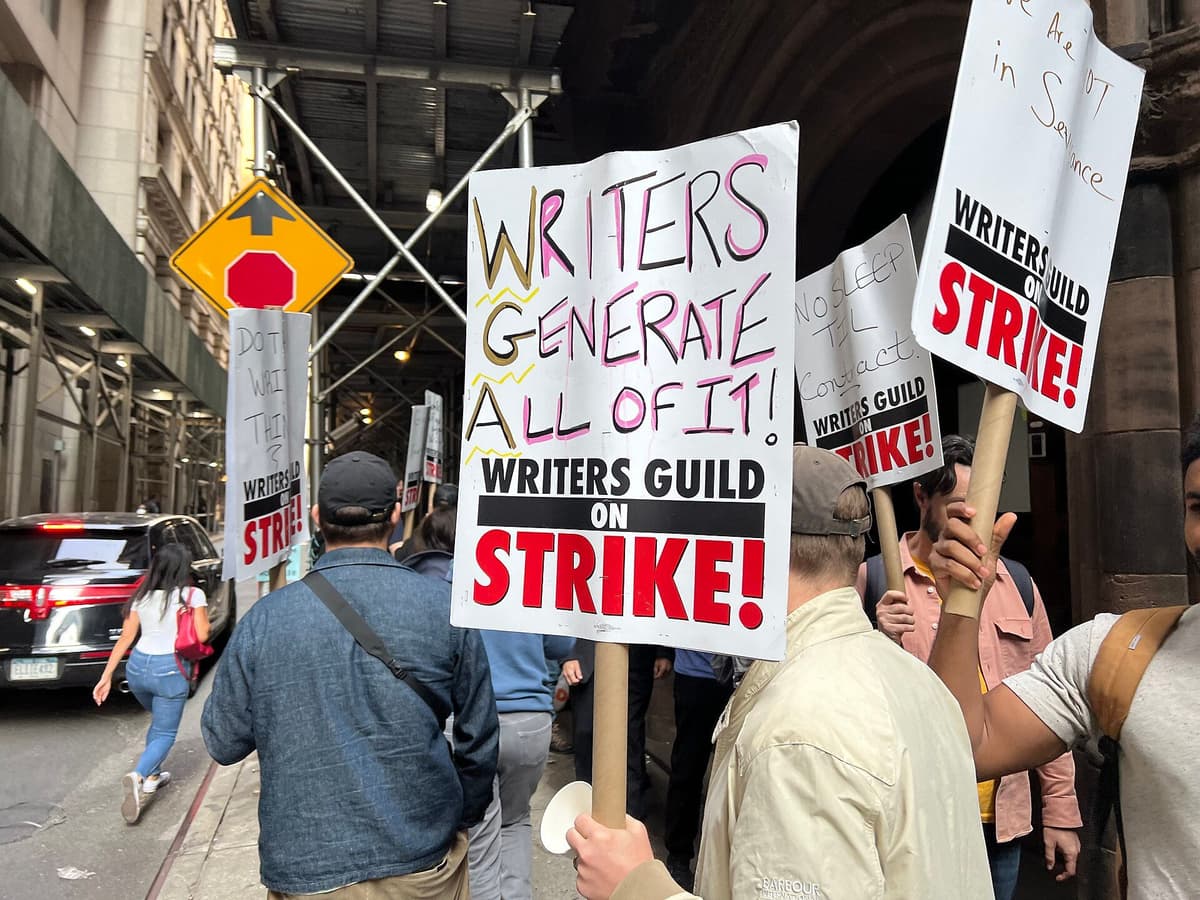
When a film finishes shooting, the studio does not decide the writing credit on its own. The Writers Guild of America East sets out a procedure in its Screen Credits Manual that lets writers challenge the credits a company proposes. If they cannot agree, the question goes to a three-member Arbitration Committee that reads the drafts.
The rules are built around each writer's contribution to the final shooting script. The process has steps and deadlines, some stated in each notice and others set by the time frames in the MBA. A few cases skip the challenge stage and go straight to arbitration.
The notice starts the clock
After principal photography, the company sends a Notice of Tentative Writing Credits to the Guild and to each participating writer. The notice lists the writers, any production executives and the credits the company proposes. The WGA East's Credits Survival Guide says a writer who believes shooting has ended and has not received a notice should contact the Guild's Credits Department right away.
A writer who disagrees must send a written protest to both the Guild and the company before the deadline printed on the notice. The protest should state that the writer is protesting the tentative credits, the production name, and how the writer thinks the credits should read. The manual quotes the Minimum Basic Agreement as allowing a deadline no earlier than 12 business days after dispatch, or no earlier than 7 business days when the company states an emergency. If no timely protest arrives, the proposed credits become final.
Writers try to agree before arbitration
A protest does not go straight to a hearing. Writers who disagree may first try to reach a unanimous agreement among themselves. Credits staff can help arrange a discussion when agreement looks possible. Only when that fails do the credits go to arbitration.
Some situations go to arbitration automatically, with no protest needed. According to the Survival Guide, these include a production executive proposed for writing credit alongside non-executive writers, three writers sharing screenplay or teleplay credit, and proposed screen story or television story credits. Adaptation credits also qualify. For television only, developed-by credits on series with separated rights are included. A created-by credit does not trigger automatic arbitration, the guide says.
How the arbitration committee decides
Arbitrations are coded, so the writers appear as Writer A, Writer B and so on. Each writer may submit a statement and verified literary material. The guide says each writer has 24 hours after notice that there will be an arbitration to prepare the statement. Writers may also request a pre-arbitration hearing to resolve disputes over the materials.
A three-member Arbitration Committee aims for a unanimous decision and otherwise decides by majority, based on each writer's contribution to the final shooting script. The manual sets 21 business days as the time allowed for the arbitration under the Minimum Basic Agreement. The Survival Guide says the arbitration steps must be completed within the time frames set forth in the MBA.
Any participating writer may request an appeal to the Policy Review Board within 24 hours of notice of the committee's decision. According to the guide, the board only reviews whether there has been any serious deviation from Guild policy or procedure. It cannot reverse the committee's judgment of the writing.
Producers and directors face a higher bar
A writer who also receives producing or directing credit is treated as a production executive for arbitration purposes. The manual says a producer's or director's tentative story or screenplay credit does not become final until an arbitration approves it. The exception applies when the story or screenplay writing is done entirely without any other writer.
The threshold rests on a percentage test for screenplay credit. On an original screenplay, a production executive who is not the first writer must contribute more than 50 percent of the final script. On a non-original screenplay, the threshold is more than 33 percent. If the executive intends to claim credit as a team, the executive must give written notice to the Guild and the other writers when team writing begins, or the executive cannot claim co-authorship.
The guide adds that writers who negotiate producer credit, and in episodic television story editors, are also treated as production executives. The percentages vary by whether the writer is a production executive and by whether the screenplay is original, and the manual sets them out.
“Unless the story or screenplay writing is done entirely without any other writer, a producer's or director's tentative story or screenplay credit does not become final until an arbitration approves it.”
What the ampersand signals
Team credits carry a visible marker. An ampersand between names shows that writers worked together as a team. The word and shows that writers worked separately, usually with one writer rewriting the other.
The manual says this convention follows industry custom and is not a matter of writer preference.
The Additional Literary Material credit
Not every writer who worked on a film receives a writing credit. In a November 15, 2021 announcement, WGA East said members of both Writers Guilds had voted to approve a rule that authorizes an Additional Literary Material end credit for feature films. The announcement reports a 73 percent yes vote. The credit will be available on projects whose credits become final after December 31, 2021.
The announcement does not say who is eligible for the credit, how names appear in databases or the end crawl, or whether writers who receive it share in residuals. It directs readers to each Guild's website for more information, and readers who need those details should check the current manual before relying on them. The WGA East copy of the manual applies to notices submitted after November 12, 2018, and the credits index page does not list a version date for the current edition. Studios and writers should confirm which edition governs a given notice.
More in Hollywood

Skydance
Skydance Adds Laurene Powell Jobs and Bobby Kotick to Its Board
Skydance's SEC filing names Laurene Powell Jobs and Bobby Kotick as directors, with both seats tied to the Warner Bros. Discovery merger closing.
studio deals
First-Look Deals Offer Freedom; Overall Deals Offer Millions and Exclusivity
Studios and streamers use two very different structures to lock down producer talent. First-look deals offer overhead and freedom; overall deals offer guarantees and exclusivity.